How a Suit Should Actually Fit
Why a Perfect Fitting Suit Changes Everything
A perfect fitting suit is one of the most powerful things a man can wear — but only when it actually fits. Here's a quick summary of what that means:
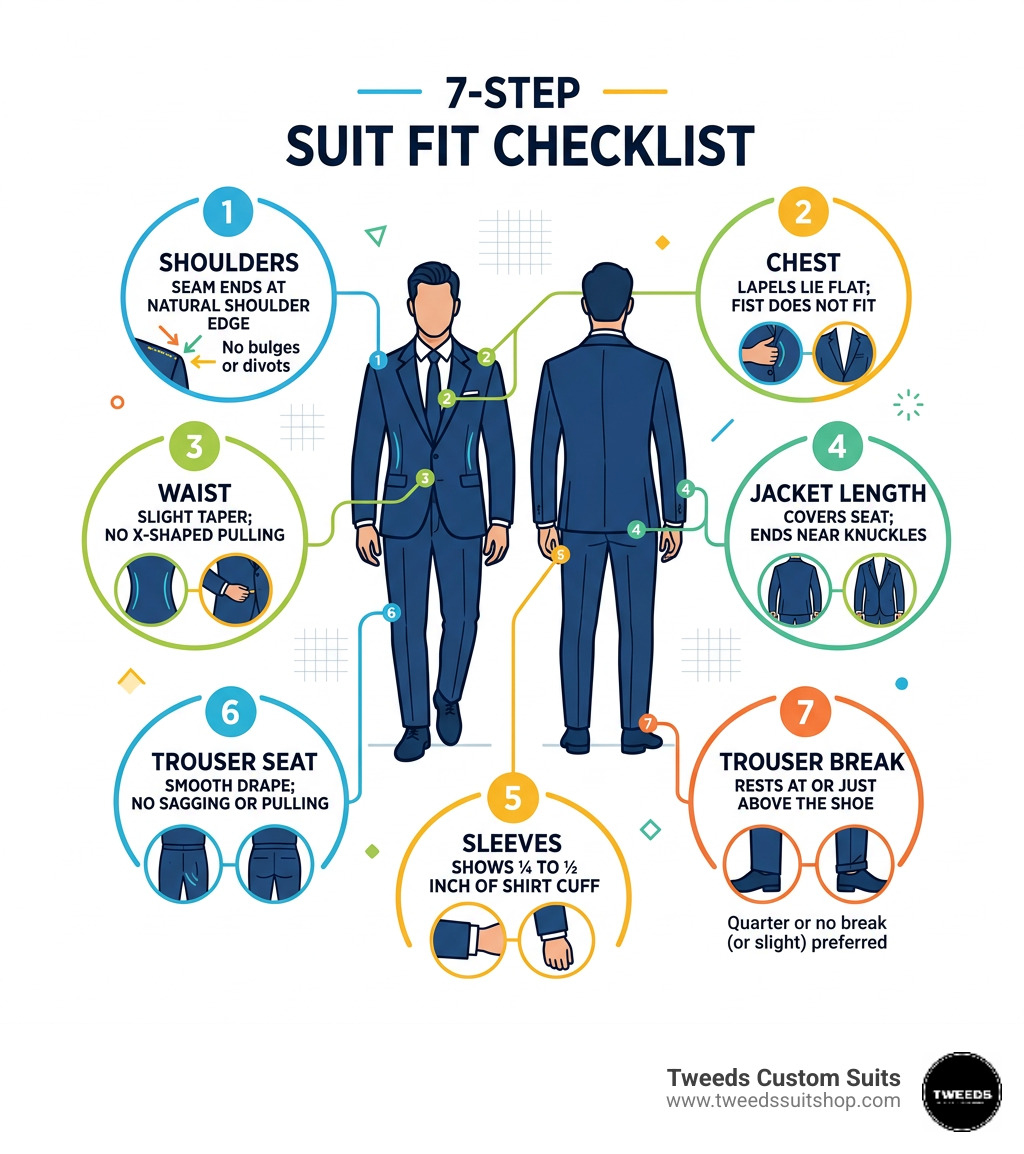
| Fit Area | What to Look For |
|---|---|
| Shoulders | Seam ends exactly at your natural shoulder edge |
| Chest | Lapels lie flat; palm fits between button and body, fist does not |
| Waist | Slight taper with no X-shaped pulling at the button |
| Jacket Length | Covers your seat; ends near your knuckles |
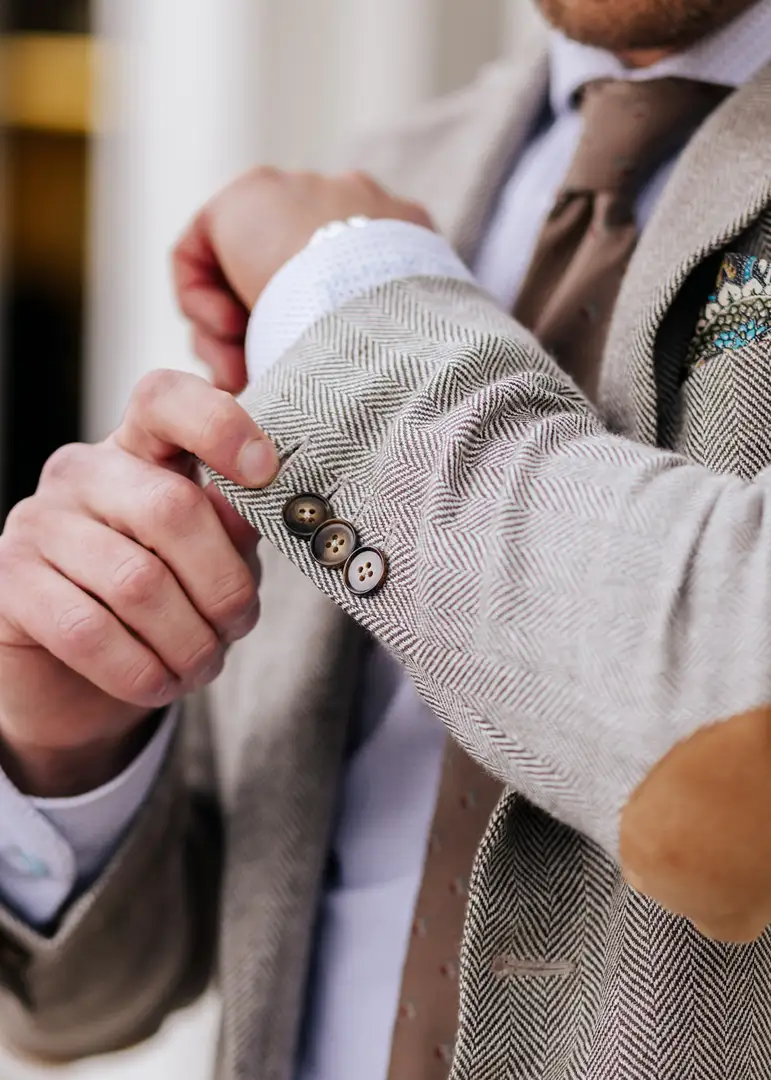
| Sleeves | Shows ¼ to ½ inch of shirt cuff |
| Trouser Seat | Smooth drape with no sagging or pulling |
| Trouser Length | Rests at or just above the shoe with your preferred break |
Most men have worn an ill-fitting suit at some point. The shoulders pull. The jacket bunches. The trousers sag. And no matter how expensive the fabric or how prestigious the label, none of that matters if the suit doesn't fit your body.
Fit isn't just a style preference. It shapes how others see you, how you carry yourself, and how long your suit lasts.
I'm Donald Carlson, founder of Tweeds Custom Suits, and I grew up surrounded by fine menswear through my family's dry-cleaning business — so I've seen what separates a perfect fitting suit from one that simply looks like it belongs to someone else. That experience is the foundation of everything we do at Tweeds.
The Anatomy of a Perfect Fitting Suit Jacket
When we talk about the anatomy of a suit, the jacket is undoubtedly the backbone. It’s the first thing people notice and the hardest part to get right. A jacket that fits well creates a V-shaped silhouette that broadens the shoulders and narrows the waist, regardless of your actual body type.
A perfect fitting suit jacket should feel like a second skin—not a suit of armor. You should be able to move your arms, sit down, and even hail a cab in Charlotte or Miami without feeling like the seams are about to give way.
Essential Elements of a Perfect Fitting Suit
To determine if your jacket is hitting the mark, we use a few "golden rules" of tailoring:
- The Palm Test: This is our favorite quick check. Button your jacket and slide your hand between your chest and the fabric. Your palm should fit comfortably, but if you can make a fist, the jacket is too loose. If you can’t get your palm in at all, it’s too tight.
- The "X" Marks the Spot: Look at the closing button. If you see lines of tension radiating outward in an "X" shape, the jacket is pulling. This is a "deal-breaker" fit issue. A slight taper is good; a strained button is not.
- The Lapel Roll: Your lapels should lie flat against your chest. If they are gaping or bowing outward, the jacket is likely too tight across the chest or the shoulders are misaligned.
- Armhole Height: Higher armholes allow for more movement. If the armholes are too low, the entire jacket will lift up every time you reach for your phone or a glass of water.
- Collar Gap: There should be no gap between your jacket collar and your shirt collar. It should rest naturally against the back of your neck. A gap usually indicates the jacket’s back is too long or the shoulders are pitched incorrectly.
For more information on the investment required for this level of precision, you can view our Pricing.
Shoulder Fit: The Foundation of Tailoring
If there is one thing you take away from this guide, let it be this: The shoulders must fit perfectly from day one.
The shoulder is the foundation of the entire garment. Unlike the waist or the sleeve length, the shoulders are incredibly difficult—and expensive—to alter. In many cases, a tailor would have to deconstruct the entire jacket, which often costs more than the suit itself.
- Natural Contour: The shoulder seam should end exactly where your natural shoulder ends.
- Shoulder Divots: If the shoulder extends too far, the fabric will collapse inward, creating a "divot" or a hollow dent just below the seam.
- Overhang: If the padding sticks out past your arm, you’ll look like you’re wearing a costume from a 1980s power-lunch movie.
- The Wall Test: Stand sideways against a wall. Your suit’s shoulder pad and your natural shoulder should touch the wall at the same time. If the pad hits first and scrunches up, it’s too wide.
Mastering Trouser Fit and Proportions
While the jacket gets the glory, the trousers provide the balance. We’ve all seen the "puddle" effect—where excess fabric gathers around the ankles—and it instantly ruins the streamlined look of a perfect fitting suit .
Properly fitted trousers should follow the lines of your legs without clinging to them. They should provide enough room for you to sit comfortably in a meeting in Atlanta or New Orleans without fearing a seam failure.
If you are preparing for a big day, check out our guide on Suit Up Without the Stress: Top Custom Wedding Suits with Fit Guarantees.
Understanding the Trouser Break
The "break" is the fold or creasing of the fabric where the pant leg meets your shoe. This is often a matter of personal style, but it significantly impacts your proportions.
- No Break: The hem of the trousers barely grazes the top of the shoe or hovers just above it. This is a modern, clean look that is very popular in cities like Tampa and St. Petersburg. It works best with slim or tapered trousers.
- Quarter/Slight Break: A tiny indentation where the fabric hits the shoe. This is the "goldilocks" of breaks—versatile, professional, and timeless.
- Half Break: A more traditional look with a visible fold. It’s a safe bet for conservative business environments.
- Full Break: One full fold of fabric. This is a classic look, but be careful—if the fabric starts to "puddle" or stack, the trousers are simply too long and will make you look shorter.
Signs of a Poor Trouser Fit
How do you know if your pants aren't making the cut? Look for these red flags:
- Pocket Gaping: If your side pockets are flaring open like elephant ears, the trousers are too tight across the hips or seat.
- Sagging Seat: If there is excess fabric bunching under your rear, the "rise" or the seat measurement is too large. It creates a sloppy, "diaper-like" appearance.
- Tight Thighs: You should be able to pinch about an inch of fabric at the thigh. If you can't, the trousers will wear out quickly due to friction.
- The Two-Finger Rule: You should be able to slide two fingers into your waistband comfortably. If you need a belt to keep them from falling down, the waist is too large. If you have to hold your breath to button them, well, you know the answer.
Comparing Slim, Modern, and Classic Fit Styles
Not every body is built the same, which is why different "fit" categories exist. Choosing the right one is about more than just your weight; it’s about your frame and how you want to present yourself.
| Feature | Classic Fit | Modern Fit | Slim Fit |
|---|---|---|---|
| Chest & Waist | Roomy, minimal taper | Slightly tapered | Highly tapered |
| Shoulders | Traditional padding | Natural or light padding | Narrow, sharp |
| Trousers | Straight leg, more room | Slight taper | Tapered, narrow opening |
| Best For | Larger frames, comfort | Most body types | Athletic or lean builds |
| Vibe | Traditional, Authoritative | Versatile, Professional | Fashion-forward, Sharp |
If you have specific questions about which fit is right for your build, our FAQs cover many common concerns.
Classic Fit
The Classic Fit is all about comfort and tradition. It provides more room in the chest and waist, making it an excellent choice for men with larger frames or those who prefer a more conservative look. It doesn't mean "baggy"—a classic fit should still follow your body's shape, just with more breathing room.
Modern and Slim Fit
The Modern Fit is the most popular choice at our showrooms from Charlotte to Sarasota. It offers the best of both worlds: a tapered waist and narrower sleeves than the classic fit, but with enough room to remain comfortable for all-day wear.
The Slim Fit is designed for men with leaner or more athletic builds. It features higher armholes, a shorter jacket length, and a much more pronounced taper through the legs. When done correctly, it looks incredibly sharp. When done incorrectly (too tight), it looks like you outgrew your suit years ago.
How to Achieve the Ideal Look Through Tailoring
Most men start with "off-the-rack" (OTR) suits, which are built to a generic size template. The problem? Almost no one is a "generic" size. You might have one shoulder higher than the other, a shorter torso, or more muscular thighs.
This is where the magic of tailoring comes in. While OTR suits can be improved with alterations, the ultimate path to a perfect fitting suit is through bespoke tailoring or made-to-measure tailoring.
At Tweeds, we offer Mobile Fittings, bringing the tailor shop directly to your home or office in locations like Franklin, TN or North Raleigh.
Measuring for a Perfect Fitting Suit
To get that elusive perfect fit, we take over 20 different measurements. While you can try to measure yourself at home with a friend and a tape measure, a professional consultation is always recommended to account for posture and "pitch."
Key measurements include:
- Shoulder Width: From the edge of one shoulder to the other.
- Sleeve Length: From the shoulder seam to the wrist bone.
- Chest Circumference: Taken at the widest part of the chest.
- Waist: Not your jean size, but your actual natural waistline.
- Inseam: From the crotch to the desired hem length.
Ready to get started? You can book your own session through our Appointments page.
Common Tailoring Adjustments
If you have an existing suit that needs a "tune-up," these are the most common (and effective) adjustments a tailor can make:
- Waist Intake: Taking in the sides of the jacket to create that desired V-shape.
- Sleeve Shortening: Ensuring you show just the right amount of cuff.
- Hem Adjustment: Fixing the trouser break to match your height.
- Tapering Legs: Removing the "bell-bottom" look from older or wider trousers.
- Collar Roll Fix: Removing the bunching of fabric that often happens just below the back of the neck.
Frequently Asked Questions about Suit Fitting
How much shirt cuff should show?
The rule of thumb is one-quarter to one-half inch . Showing a bit of linen (the shirt cuff) provides a nice contrast against the suit fabric and prevents the jacket sleeves from looking too long. If you don't show any cuff, the jacket looks like it's swallowing your hands. If you show two inches, the jacket looks like it shrunk in the wash.
Is it better for a suit to be tight or loose?
If you are buying off-the-rack and are between sizes, it is almost always better to size up . A tailor can easily take a suit in, but "letting it out" is limited by the amount of extra fabric left inside the seams (which is usually very little). However, "loose" should not mean "oversized." The goal is "close to the body but comfortable."
How long should a suit jacket be?
The "knuckle rule" is a classic: with your arms hanging naturally at your sides, the hem of the jacket should reach roughly your knuckles. More importantly, the jacket must cover your entire rear. A jacket that is too short (a common trend in recent years) can throw off your body's proportions, making your legs look disproportionately long and your torso look "chopped."
Conclusion
A perfect fitting suit is an investment in yourself. It’s about more than just fabric and buttons; it’s about the confidence that comes from knowing you look your absolute best. Whether you're walking into a boardroom in Atlanta or a wedding in Delray Beach, a suit that is crafted specifically for your measurements will always outperform a designer label that doesn't fit.
At Tweeds Custom Suits, we pride ourselves on our family-owned craftsmanship and our commitment to a perfect fit. We combine traditional techniques with modern technology—like our digital cutting and expert master-tailor reviews—to ensure every garment we produce meets our rigorous standards.
If you’re ready to stop settling for "good enough" and want to experience the difference of a truly custom fit, we invite you to visit one of our showrooms or book a mobile fitting. We stand behind our work with a perfect fit guarantee because we believe every man deserves to feel the power of a suit made just for him.
Visit us at https://www.tweedssuitshop.com to start your journey today.