Linen suit fabrics that will have them drooling this summer
Understanding Linen Summer Suit Fabrics and Their Characteristics
When we talk about linen summer suit fabrics , we are referring to a textile with a history as rich as its texture. Linen is a natural fiber derived from the stalks of the flax plant. Unlike synthetic materials that trap heat, linen is a "living" fabric that breathes with you.
One of the first things you’ll notice about a high-quality linen suit is the natural slubbing . These are the slight knots and irregularities in the weave. Far from being a defect, these slubs are a hallmark of authenticity, providing a beautiful, organic matte finish that sets it apart from the shiny, uniform look of polyester blends.
Key Technical Specifications
To ensure your suit has enough structure to look professional but enough "air" to keep you cool, weight is everything.
- Fabric Weight : Most premium linen suiting falls between 6 oz and 9 oz per square yard . An 8.5 oz weight is often considered the "sweet spot" for a 100% linen suit—heavy enough to drape well, but light enough to feel weightless.
- The Weave : Linen features an open weave . If you were to hold a swatch up to the light, you would see tiny gaps between the threads. This is the secret to its legendary airflow.
- Width and Construction : Standard suiting bolts are approximately 140cm (55 inches) wide . Because linen is a natural fiber, it is also inherently hypoallergenic and thermoregulating , meaning it helps keep your body at a consistent temperature regardless of the external humidity.
Why Linen Outperforms Other Seasonal Materials
In the battle against the summer heat, not all fabrics are created equal. While many guys reach for cotton or "lightweight" wool, linen remains the undisputed heavyweight champion of the lightweight world.
| Feature | 100% Linen | Seersucker | Cotton | Tropical Wool |
|---|---|---|---|---|
| Breathability | Highest | High | Moderate | High |
| Moisture Wicking | Excellent | Good | Poor (holds water) | Excellent |
| Wrinkle Resistance | Low (Casual) | High | Moderate | High |
| Formality | Relaxed/Elegant | Casual | Business Casual | Professional |
| Heat Dissipation | Superior | Good | Fair | Good |
Linen’s ability to dissipate heat is unmatched. While cotton tends to absorb moisture and hold onto it—leaving you with that dreaded "soggy" feeling by mid-afternoon—linen wicks moisture away and dries almost instantly. This creates a process of evaporative cooling against your skin.
Furthermore, while seersucker is fantastic for its puckered texture that keeps fabric off the skin, it can sometimes feel a bit too "thematic" or casual for a serious business meeting. Linen, especially in darker shades like navy or tobacco, maintains a sophisticated silhouette that works in more formal environments. To understand more about how these choices impact your final look, check out The Ultimate Guide to Choosing the Perfect Fabric for Your Custom Suit.
The Science of Breathable Linen Summer Suit Fabrics
It isn't just magic; it’s physics. The larger "pore size" in the linen weave allows heat to escape the body much faster than the tight weave of a standard worsted wool. Additionally, flax fibers are highly conductive. This means they literally pull heat away from your core and release it into the air. In tropical climates like Florida or Louisiana, this isn't just a style choice—it's a survival tactic.
The Power of Blends: Enhancing Performance and Style
While purists love 100% linen, we often recommend linen blends for clients who want the cooling benefits of linen without the "lived-in" look of heavy wrinkling. By mixing linen with other natural fibers, we can create a fabric that offers the best of both worlds.
The Wool-Linen Blend
A very popular choice for our clients in places like Charlotte or Atlanta is the 55% wool and 45% linen mix . Usually weighing in around 8 oz , this blend uses the wool to provide "memory" to the fabric. The wool helps the suit snap back into shape and resist deep creases, while the linen provides that essential summer ventilation. It creates a crisp, professional drape that stays sharp from your morning coffee through a sunset dinner.
The Cotton-Linen Blend
If you are looking for something slightly more rugged and casual, a cotton-linen blend (often around 7.5 oz or 225g) is a fantastic option. Cotton adds a soft "hand" to the fabric, making it feel smoother against the skin, while the linen prevents the cotton from becoming too heavy or stifling.
Choosing the Right Weight for Linen Summer Suit Fabrics
When selecting your fabric, keep these stats in mind:
- Lightweight (7.5 oz / 225g) : Ideal for shirts or very casual, unconstructed summer jackets.
- Medium Weight (8.5 oz) : The standard for a full 100% linen suit.
- Shrinkage Factor : Be aware that pure linen can experience 2-10% shrinkage . This is why we always recommend professional tailoring and careful care—we account for these natural movements in the fabric during the bespoke process.
Tailoring and Styling for Maximum Summer Comfort
The fabric is the foundation, but the tailoring is the architecture. To make the most of linen summer suit fabrics , the construction of the jacket needs to be as light as the cloth itself.
The "Unstructured" Advantage
For maximum breathability, we often recommend an unstructured or half-lined jacket . A full lining acts like a layer of insulation—exactly what you don't want in 90-degree weather. By opting for a half-lining, you allow air to pass through the back of the jacket easily.
When it comes to what goes inside, the choice of material is crucial. You can learn more about this in our guide on Silk vs Bemberg: Choosing the Right Interior for Your Jacket. We generally suggest Bemberg for summer suits because it is a natural-based fiber that is much more breathable than silk or polyester.
Design Details for the Heat
- Side Vents : These allow for better airflow and prevent the jacket from bunching when you sit.
- Soft Shoulders : Removing heavy padding makes the suit feel more like a second skin and less like a suit of armor.
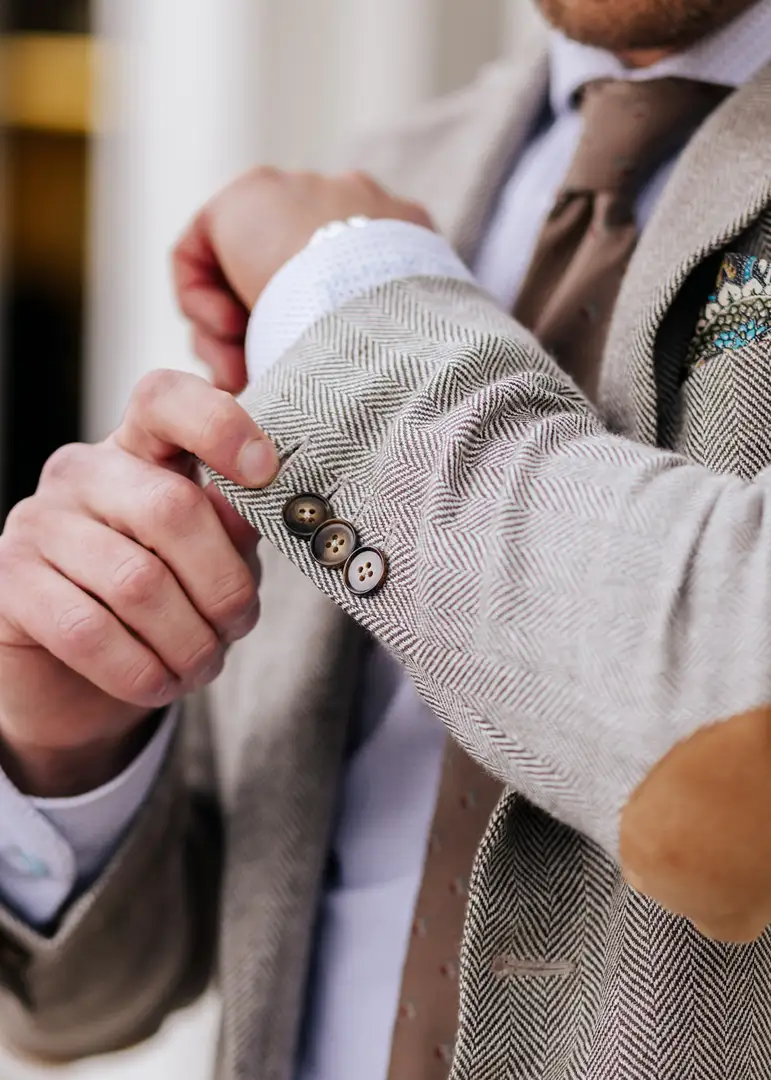
- Milanese Flower Holes : A hand-stitched Milanese buttonhole is a sign of true bespoke craftsmanship and adds a touch of sophistication to a relaxed linen lapel.
- Horn Buttons : Natural brown horn buttons, often made from buffalo or cattle horn, complement the earthy, matte texture of linen perfectly.
The Summer Color Palette
While navy and charcoal are staples, summer is the time to embrace lighter tones that reflect sunlight rather than absorbing it.
- Sand and Beige : The classic "Grand Tour" look. Perfect for beach weddings.
- Sage Green : A modern, sophisticated choice that stands out in a sea of blue.
- Pale Blue or Stone : Refreshing colors that look crisp and clean in high noon sun.
Frequently Asked Questions about Linen Suiting
How do I manage the wrinkles in a 100% linen suit?
The first step is a change in mindset: embrace the wrinkle . In high-end tailoring, the "crinkle" of a linen suit is seen as a sign of effortless elegance—it shows you are wearing a natural, expensive fiber. However, if you prefer a tidier look:
- Use a handheld steamer in the morning to release the heaviest creases.
- Never wear the same linen suit two days in a row; give the fibers 24 hours to "relax" on a wide cedar hanger.
- Opt for a wool-linen blend if you want a crisper aesthetic for business.
Is linen suiting fabric a sustainable choice?
Absolutely. Flax is a remarkably eco-friendly crop. It requires significantly less water than cotton and can grow in poor soil conditions without heavy pesticides. Furthermore, linen is 100% biodegradable . Many of the premium linens we source are OEKO-TEX certified, meaning they are processed without harmful chemicals, making them as good for the planet as they are for your skin.
How should a linen suit be cared for to maintain its appearance and longevity?
Linen is incredibly durable—it is one of the few fabrics that actually gets softer and better with age.
- Dry Cleaning : Do not over-clean your suit. Once every few months is usually sufficient unless you've had a spill.
- Spot Cleaning : Use a damp cloth for minor marks.
- Storage : Always hang your suit on a contoured hanger in a breathable garment bag. Avoid plastic bags, which trap moisture and can lead to mildew.
- Shrinkage : Linen can shrink if exposed to high heat, so never put a linen suit component in a standard washing machine or dryer.
Conclusion
Choosing the right linen summer suit fabrics is about more than just looking good; it's about reclaiming your comfort during the hottest months of the year. Whether you're navigating a humid afternoon in Miami or attending a garden party in Alpharetta, the right linen or linen-blend suit ensures you remain the coolest person in the room—literally and figuratively.
At Tweeds Custom Suits , we pride ourselves on our personalized craftsmanship. As a family-owned business with showrooms across Florida and the Southeast—including Tampa, Orlando, and Sarasota—we understand the unique demands of warm-weather dressing. We offer a perfect fit guarantee and an exhaustive selection of the world's finest linens to ensure your summer wardrobe is nothing short of spectacular.
Ready to beat the heat in style? Book your custom fitting today and let us help you design a suit that will have them drooling this summer.