A – Z Guide to Overcoats for Men
The One Outerwear Piece Every Man's Wardrobe Needs
Overcoats for men are long, structured outer garments worn over a suit or casual clothing to add warmth, weather protection, and sharp style — all at once.
Quick answer: What to know about men's overcoats
| Question | Short Answer |
|---|---|
| What is an overcoat? | A tailored, knee-length or longer coat worn over other clothing |
| Best fabric? | Wool or wool-cashmere blend for most climates |
| Most versatile colors? | Navy and charcoal grey |
| Best style for suits? | Chesterfield or double-breasted overcoat |
| Average price for quality? | $500–$900+ for premium wool |
| Key fit rule? | Shoulders aligned, room for a suit jacket underneath |
There's a reason overcoats have been worn by everyone from Winston Churchill to Daniel Craig's James Bond. A well-chosen overcoat doesn't just keep you warm — it finishes an outfit. It signals that you pay attention to detail.
Yet most men buy an overcoat out of necessity, not intention. They grab whatever fits on the rack, wear it until it pills, and repeat. That's a missed opportunity.
The global men's overcoat market was valued at $4.2 billion in 2023 and is projected to reach $6.8 billion by 2030 — because more men are realizing that a quality overcoat is one of the smartest investments in their wardrobe.
This guide covers everything: types, fabrics, fit, styling, care, and what to spend.
I'm Donald Carlson, founder of Tweeds Custom Suits — I grew up surrounded by fine menswear through my family's dry-cleaning business, and I've spent years helping men find overcoats for men that fit perfectly, not just functionally. That background gives me a practical, hands-on perspective on what separates a coat you'll wear for a decade from one you'll forget by spring.
Simple guide to overcoats for men terms:
Classic Types of Overcoats for Men
When navigating outerwear, the variety of styles can feel overwhelming. Each style of overcoat carries its own history, design DNA, and level of formality. Understanding these differences ensures you select a coat that fits your lifestyle perfectly.
- The Chesterfield: The gold standard of formal overcoats. Characterized by its clean, single-breasted silhouette, horizontal pockets, and lack of a waist seam. Traditionally, it features a contrasting black velvet collar, offering a highly polished look that pairs beautifully with business suits and formalwear.
- The Covert Coat: Originally designed for country pursuits, the covert coat is a durable, single-breasted option featuring a signature multi-stitched hem and cuffs (known as "railroad stitching") and a hidden button placket. It often includes a contrast velvet collar and a poacher's pocket. It sits comfortably between country ruggedness and city polish.
- The Peacoat: Evolving from 19th-century Royal Navy reefer jackets and standardized for the US Navy, the classic peacoat features a short, double-breasted cut, broad lapels, and vertical handwarmer pockets. Traditionally made from dense Melton wool, it remains a casual and smart-casual staple.
- The Trench Coat: Popularized in the trenches of WWI by soldiers seeking respite from wet, muddy conditions, this double-breasted icon features a waist belt, epaulettes, gun flaps, and storm cuffs. Usually constructed from water-resistant cotton gabardine, it is the ultimate transitional raincoat.
- The Car Coat: Emerging in the early 1900s when open-top automobiles lacked roofs and insulation, the car coat was designed to keep drivers warm without spoiling good clothes underneath. It features a short, straight A-line cut, a flat collar, a single-breasted front, and no rear vent for seated comfort.
- The Duffel Coat: Easily recognized by its wooden or horn toggles and rope loops (designed to be fastened while wearing thick gloves), the duffel coat features a built-in hood and a roomy fit. It is a casual classic made famous by the British Royal Navy and Field Marshal Bernard Montgomery.
- The Balmacaan: Named after an estate near Inverness, Scotland, the Balmacaan features a loose, raglan sleeve construction (where the sleeve extends in one piece to the collar) and a fly-front (hidden button) closure. It is highly valued for its natural movement and minimalist style.
- The British Warm: A heavy-duty option that originated as a military greatcoat for British Army officers in WWI. It is a thick, double-breasted coat featuring leather football buttons, epaulettes, and a peaked lapel. Winston Churchill famously favored this style for its robust structure and warmth. You can explore this military heritage with options like the Men's Navy British Warm Overcoat | Cordings.
If you are looking for a highly textured, classic fabric that stands out without being loud, Donegal tweed is an exceptional choice. It is famous for its natural color variations and subtle slubby texture. You can see how this translates to a modern silhouette in the MTO: The Donegal Overcoat – Permanent Style .
Alternatively, if you want to explore rich earth tones, you can read our guide on how to Stay Toasty with the Best Brown Overcoat Mens Styles.
Overcoat Styles Comparison Table
| Style | Traditional Fabric | Formality Level | Weather Resistance | Best Paired With |
|---|---|---|---|---|
| Chesterfield | Wool or Cashmere | High | Medium | Business Suits, Tuxedos |
| Covert Coat | Heavy Tweed / Wool | Medium-High | High | Tailoring, Smart Casual |
| Peacoat | Heavy Melton Wool | Medium-Low | High | Knitwear, Denim, Chinos |
| Trench Coat | Cotton Gabardine | Medium | High (Rain) | Suits, Tailored Separates |
| Car Coat | Wool Blend / Cotton | Medium-Low | Medium | Sweaters, Casual Trousers |
| Duffel Coat | Coarse Wool | Low | High | Casual Wear, Boots |
| Balmacaan | Tweed / Gabardine | Medium-Low | High | Layered Knitwear, Casuals |
| British Warm | Heavy Melton Wool | High | High (Cold) | Heavy Tailoring, Suits |
Single-Breasted vs. Double-Breasted Overcoats for Men
The choice between a single-breasted and a double-breasted overcoat dramatically alters the coat's silhouette, formality, and thermal efficiency.
Single-breasted overcoats are the most common and versatile choice. Featuring a single row of buttons and a narrow overlap of fabric, they offer a clean, vertical line that elongates the body. They are incredibly easy to dress down, looking just as natural over a casual sweater as they do over a formal suit.
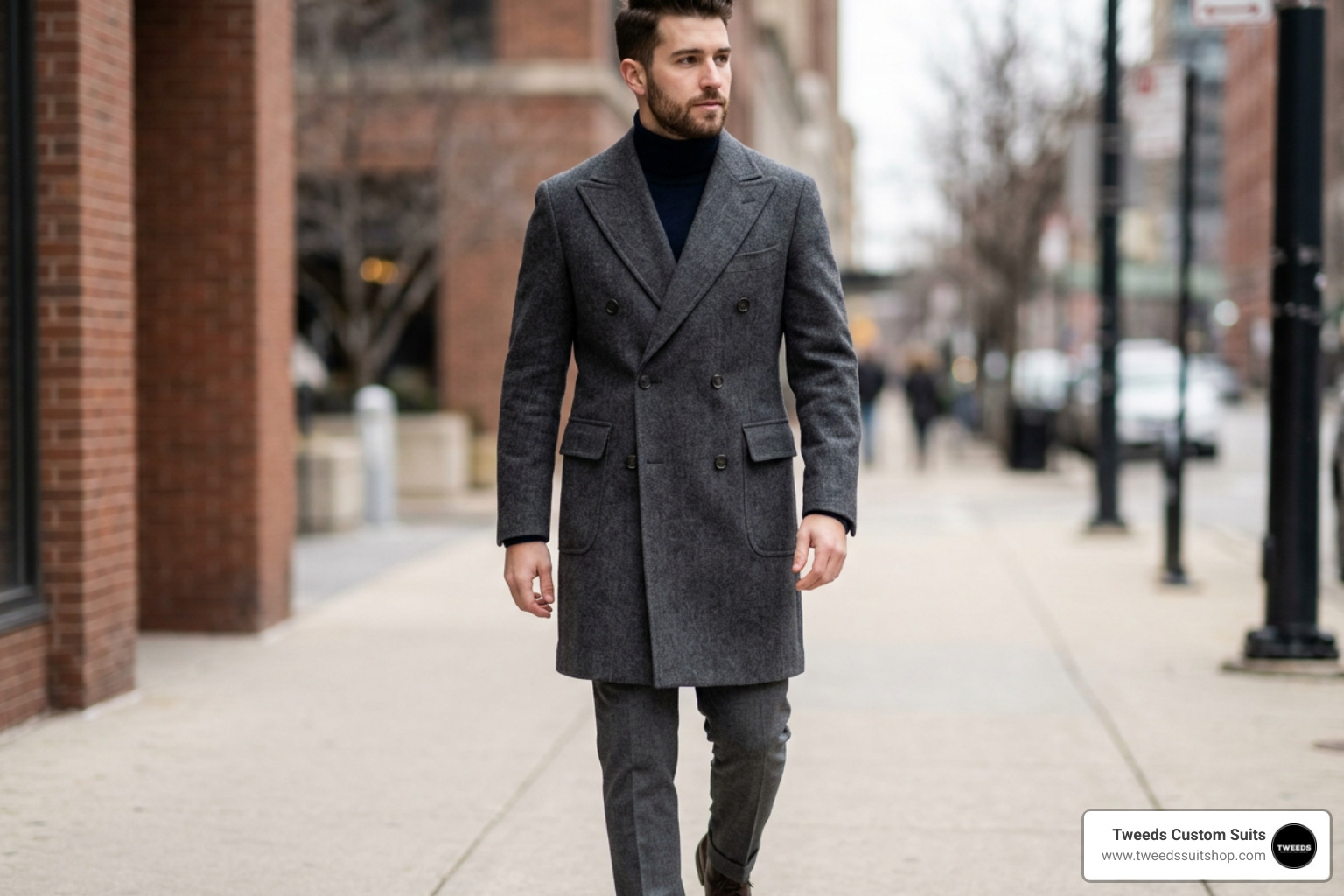
Double-breasted overcoats, on the other hand, feature two parallel rows of buttons and a generous overlap of fabric across the chest. This double layer of fabric provides superior wind resistance and warmth. From a style perspective, double-breasted overcoats project authority and classic elegance.
Double-breasted styles have seen a massive resurgence, with sales increasing 34% year-over-year in recent years , outpacing single-breasted styles as men embrace bolder, more structured silhouettes.
For a prime example of Italian tailoring in a double-breasted cut, look to the Robert Old - Brown Herringbone 100% Virgin Wool Tailored Overcoat – Robert Old & Co, which utilizes a Drop 8 silhouette to maintain a slim, modern profile even with a double-breasted front.
Casual vs. Formal Overcoats for Men
While some coats are chameleons, others lean heavily toward one end of the formality spectrum.
Formal overcoats, like the Chesterfield or the classic Epsom coat, feature structured shoulders, clean lines, and minimal external detailing. They are designed to sit perfectly over a suit jacket without wrinkling the garments underneath.
Casual overcoats, such as duffel coats, car coats, and unconstructed wool coats, focus on relaxed silhouettes and practical features. These styles prioritize ease of movement and layering capacity over sharp structure.
Choosing the right casual overcoat comes down to balancing comfort with a polished appearance. If you want to dive deeper into this balance, check out our insights on Custom Style: Finding Your Next Casual Overcoat for Men.
If you are looking for local retail options in our showroom regions, you can find casual selections at the Mens Casual Overcoat in Franklin, TN - CoolSprings Galleria.
Premium Materials and Construction Details
An overcoat is only as good as the materials and craftsmanship that go into making it. Because an overcoat is exposed to the harshest winter elements, investing in high-quality materials ensures durability, warmth, and a drape that flatters your frame.
Fabric Selection: Wool, Cashmere, and Performance Blends
The fabric you choose dictates how your coat handles cold, wind, and daily wear.
- Wool: Wool remains the undisputed king of overcoat fabrics, accounting for 62% of premium overcoat sales . It is naturally water-resistant, highly insulating, and incredibly durable. Dense weaves like Melton wool offer unparalleled wind protection, while lighter wools provide excellent drape.
- Cashmere: The ultimate luxury fabric. Cashmere is exceptionally soft, lightweight, and warmer than standard sheep's wool. However, pure cashmere is delicate and prone to wearing down at friction points (like the cuffs and collar). A wool-cashmere blend is often the ideal compromise, offering the softness of cashmere with the strength of wool.
- Tweed: Highly textured and rustic, tweed is perfect for adding visual interest and rugged durability to your winter wardrobe.
- Performance Synthetics: Modern menswear occasionally blends classic tailoring with performance fabrics. For instance, the Unconstructed Cordura Relaxed Overcoat | Thom Browne utilizes abrasion-resistant Cordura nylon to create a durable, weather-resistant layer with a highly contemporary feel.
Key Quality Markers to Look For
When shopping for overcoats for men , look past the brand name and examine the construction details:
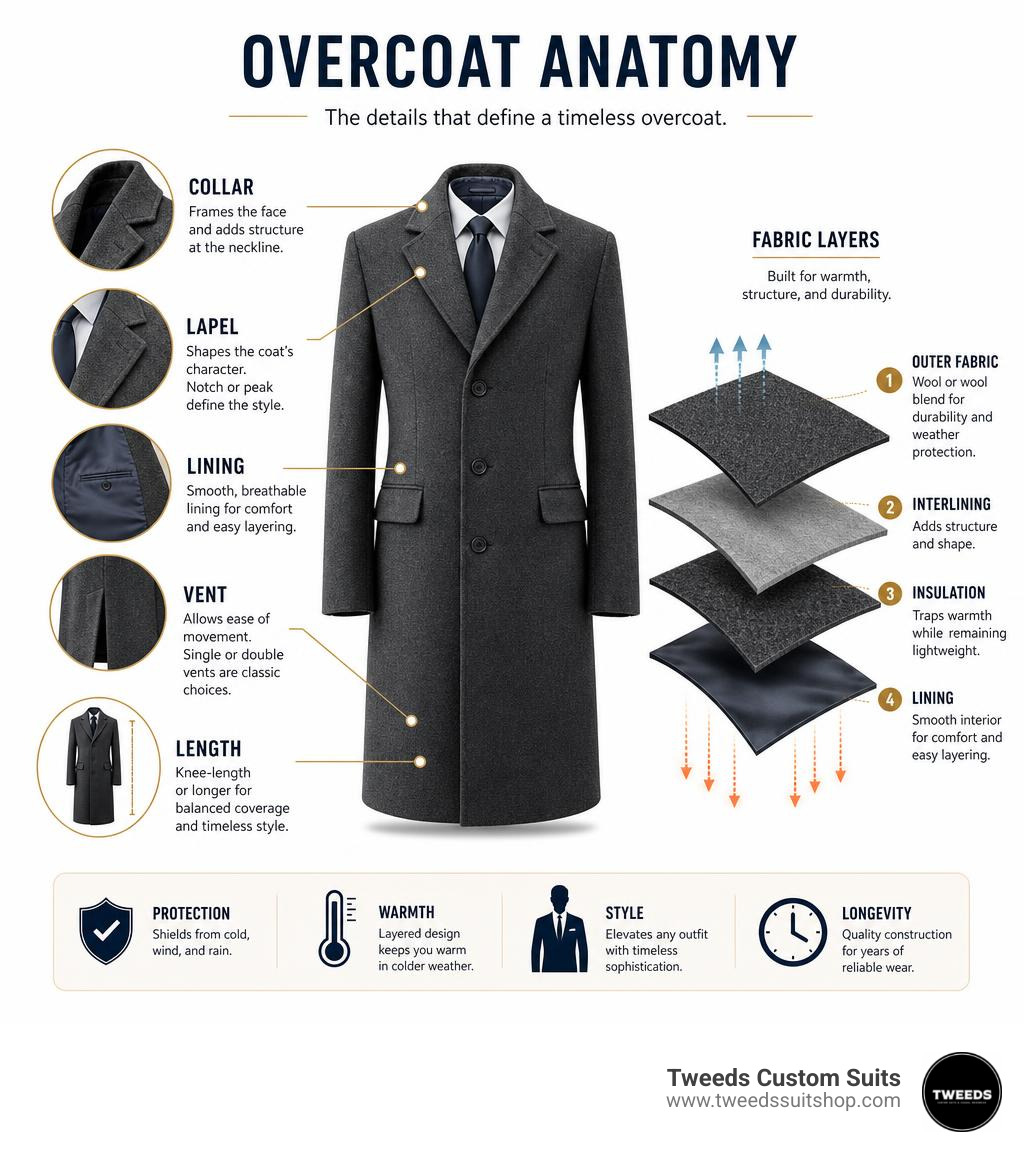
- Canvas Construction: Premium overcoats feature a full or half-canvas construction, where a layer of horsehair fabric sits between the outer wool and the inner lining. This canvas molds to your body shape over time, ensuring a perfect drape. Cheap coats rely on fused (glued) interlinings that stiffen the chest and can bubble after dry cleaning.
- Lining: Look for a fully lined coat. High-quality linings use Bemberg or Cupro, which are breathable, anti-static, and allow the coat to slide effortlessly over your suit jackets or sweaters.
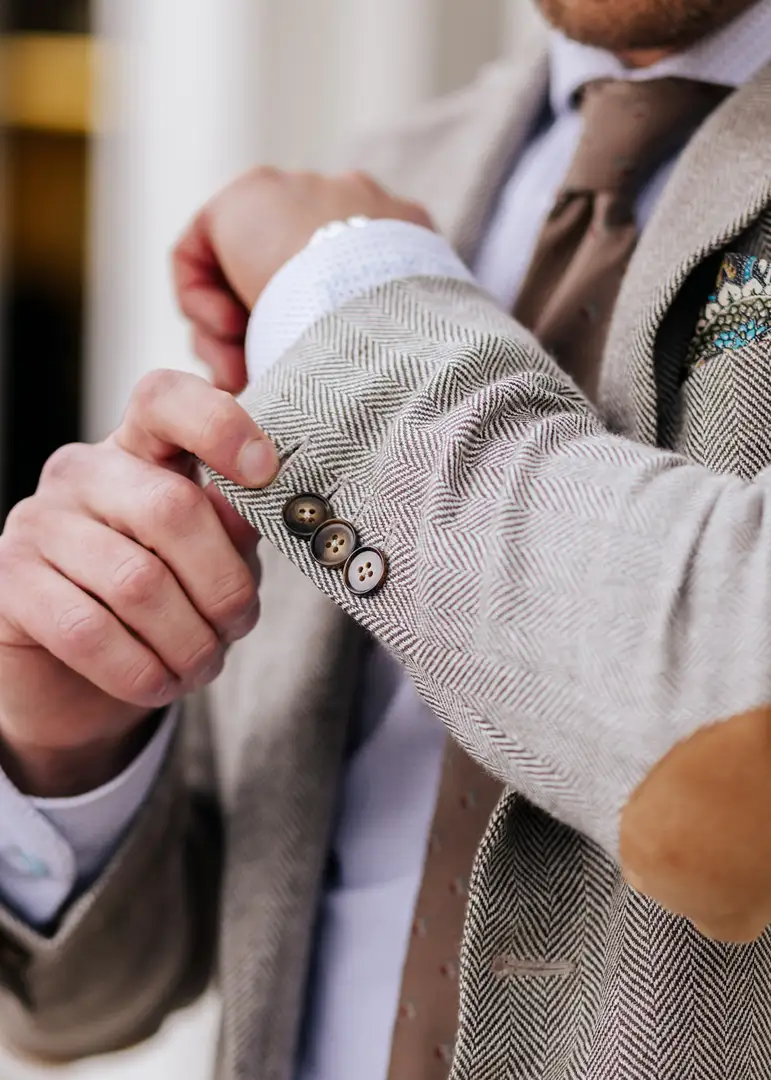
- Buttons: Genuine horn, corozo, or leather buttons are a hallmark of quality tailoring. They should be securely sewn, ideally with a thread shank (a small stem of thread behind the button) to allow room for the thick coat fabric when fastened.
- Vents: A single center vent is classic and clean. A double vent offers more mobility and is common on double-breasted styles. Avoid coats with no vents, as they restrict your stride and bunch up when you sit.
Finding the Perfect Fit, Length, and Color
Even the most expensive coat will look subpar if the fit is incorrect. Because an overcoat is designed to be worn over multiple layers, achieving the perfect fit requires careful attention to proportions.
Sizing and Tailoring Guidelines
When trying on an overcoat, always wear the thickest layer you plan to wear underneath it—whether that is a heavy knit sweater or a structured suit jacket.
- Shoulders: The shoulder seams of the overcoat should sit slightly past your natural shoulder bone, allowing room for the shoulder pads of your suit jacket without pulling or creating a boxy look.
- Chest: Button the coat completely. You should be able to slide a flat hand easily into the chest pocket area, but there shouldn't be a massive gap. If the lapels pop outward or bow, the coat is too tight.
- Sleeves: The sleeves should cover your suit jacket cuffs and shirt wrists completely, ending about half an inch past your wrist bone to keep cold air out.
- Tailoring Outerwear: Unlike basic shirts, tailoring heavy outerwear requires precision. Heavy fabrics and structured shoulders demand specialized sewing machines and a tailor experienced in outerwear construction to adjust the shoulder balance or button stance properly.
If you are shopping in our active regions, you can find standard off-the-rack sizing options at national retailers like Men's Overcoats - Macy's. For regional tailoring and ready-to-wear options, consider visiting:
Choosing the Right Length and Color
The length and color of your coat dictate its versatility and how well it flatters your height.
Length Guidelines
- Full-Length (Ankle to Calf): Traditionally favored for maximum warmth, full-length coats offer a dramatic, elegant silhouette. However, they can overwhelm shorter frames.
- Knee-Length: The most versatile and modern length. It hits right at or slightly above the knee, flattering almost every body type while providing excellent weather protection.
- Mid-Thigh (3/4 Length): Common for car coats and peacoats. This length is highly casual and practical for driving or commuting, but it does not pair as well with formal suits as it can expose the hem of your suit jacket if not cut carefully.
Color Selection
Navy and charcoal grey remain the undisputed champions of menswear, representing 48% of total overcoat sales combined . They are professional, hide dirt exceptionally well, and pair seamlessly with almost any suit color.
Camel and rich browns are excellent secondary options, offering a warm, sophisticated contrast that elevates casual denim and knitwear.
How to Style and Care for Your Overcoat
An overcoat is a high-visibility piece. It is the first thing people see when you walk into a room, making it a powerful styling tool.
Layering Techniques for Different Occasions
The beauty of a high-quality overcoat lies in its ability to transition from formal business settings to relaxed weekend outings.
- The Formal Look: Layer a single-breasted charcoal or navy Chesterfield over a dark grey custom suit. Complete the look with leather dress shoes and a neatly folded silk scarf.
- The Smart-Casual Balance: Pair a camel overcoat over a cream crewneck cashmere sweater, dark wash denim, and leather Chelsea boots. This high-low contrast is modern, comfortable, and effortlessly sharp.
- The Casual Weekend: Throw an unconstructed, relaxed-fit overcoat over a clean grey hoodie, tailored joggers, and minimalist leather sneakers. This "streetwear-meets-tailoring" aesthetic has become a modern classic.
For more inspiration on mastering this relaxed look, read our guide on The Best Casual Mens Overcoat Styles for a Sharp Winter Look.
Maintenance and Longevity Tips
Because quality wool overcoats are built to last, proper care can easily extend their lifespan to a decade or more.
- Use the Right Hanger: Always hang your overcoat on a wide, contoured wooden hanger. Thin wire hangers will ruin the shoulder structure over time due to the heavy weight of the fabric.
- Brush Regularly: Invest in a high-quality wild boar bristle wool brush. Brush your coat downward after each wear to remove dust, lint, and organic fibers before they settle into the weave and cause pilling.
- Spot Clean First: Avoid dry cleaning your coat more than once a year. The harsh chemical solvents strip the natural oils (lanolin) from wool fibers, making them dry and brittle. Instead, spot clean small stains with a damp cloth and mild detergent.
- Seasonal Storage: At the end of winter, dry clean your coat one final time to remove organic oils that attract moths. Store it in a breathable garment bag (avoid plastic bags, which trap moisture) with cedar blocks in a cool, dry wardrobe.
Frequently Asked Questions about Overcoats
What is the difference between an overcoat and a topcoat?
While the terms are often used interchangeably today, historically they differed by weight and length:
- Overcoats are constructed from heavy fabrics (typically weighing 24 to 30 ounces per yard), extend below the knee, and are designed for deep winter weather.
- Topcoats are made from lighter fabrics (12 to 18 ounces), end at or above the knee, and are intended for transitional spring and autumn weather.
How much should I invest in a quality overcoat?
The average price of a premium men's wool overcoat increased 18% between 2021 and 2024 , with the current average retail price sitting at $895 in 2026.
While you can find cheaper synthetic blends, investing in a high-quality wool or wool-cashmere blend is highly cost-effective when calculated on a "cost-per-wear" basis. A premium, well-constructed coat will easily outlast five cheap synthetic alternatives while retaining its shape and warmth.
Can you wear a formal overcoat with casual clothes?
Absolutely. One of the most stylish modern moves is pairing a structured, formal overcoat (like a Chesterfield or double-breasted coat) with casual staples like a hoodie, dark denim, and clean sneakers. This high-low contrast creates an incredibly balanced, contemporary look.
Conclusion
An overcoat is more than just a shield against the cold; it is the ultimate finishing touch to a man’s style. Whether you are commuting to the office in a tailored suit or heading out for a casual weekend, the right overcoat frames your silhouette and projects effortless confidence.
At Tweeds Custom Suits , we believe that true style starts with a flawless fit. We craft bespoke, fully customized suits and outerwear with your choice of premium fabrics, personalized linings, and custom buttons—all backed by our perfect fit guarantee.
As a family-owned business, we bring personalized craftsmanship directly to you across our showrooms in Florida (including Delray Beach, Fort Lauderdale, Jacksonville, Miami, Naples, Orlando, Palm Beach Gardens, Sarasota, St. Petersburg, and Tampa) as well as our locations in Alpharetta, GA, Chamblee, GA, Charlotte, NC, Franklin, TN, New Orleans, LA, and Rye, NY.
Ready to elevate your winter wardrobe with a coat designed specifically for your frame? Book an appointment with us today at Tweeds Custom Suits and experience the difference of custom tailoring.