Button Up and Stand Out with These Top Rated Dress Shirts
The Dress Shirt That Actually Fits: A 2026 Buyer's Guide
Button up dress shirts for men are one of the most searched wardrobe items online — and for good reason. The right dress shirt can make you look polished and confident. The wrong one can ruin an otherwise great outfit.
Here's a quick answer to help you find what you need:
| What You're Looking For | Best Option |
|---|---|
| Everyday office wear | Pinpoint oxford or fine twill, tailored fit |
| Formal events or weddings | Fine twill or poplin, spread collar, French cuff |
| Low-maintenance travel | Non-iron or easy-care performance fabric |
| Best possible fit | Custom made-to-measure or bespoke |
| Budget-friendly quality | Ready-to-wear Supima cotton, slim or tailored fit |
The global market for men's dress shirts is projected to hit $15.8 billion by 2030 — and the fastest-growing segment is performance and wrinkle-free shirts, now making up over 45% of U.S. sales. That tells you a lot about what men actually want: shirts that look great and hold up to real life.
But fit, fabric, and occasion still matter more than any single feature. This guide covers all of it.
I'm Donald Carlson , founder of Tweeds Custom Suits — I grew up handling button up dress shirts for men daily in my family's dry-cleaning business, then spent years selling and sourcing premium menswear before building Tweeds into one of Florida's top destinations for custom-made clothing. That hands-on experience across fabrics, fits, and construction is what shaped everything you'll read here.
Button up dress shirts for men terms to remember:
The Essential Guide to Button Up Dress Shirts for Men
A great dress shirt is more than "white shirt with buttons." Construction details change how formal it looks, how easy it is to style, and whether it works with a suit, sport coat, or jeans.
Here are the main design elements to know.
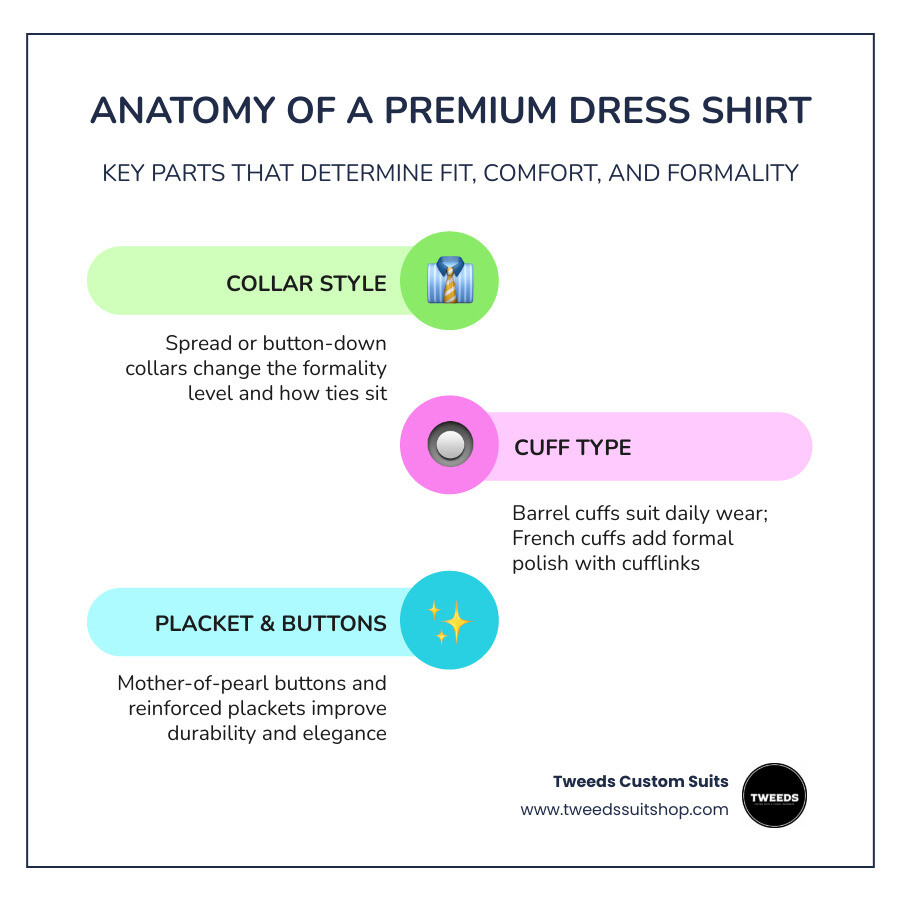
Collar styles
Collars do a surprising amount of work. They frame your face, determine which tie knots look best, and signal formality.
- Spread collar: One of the most versatile choices. It works well for business, weddings, and most tailored wardrobes.
- Semi-spread collar: A safe middle ground for men who want flexibility with or without a tie.
- Button-down collar: More relaxed and rooted in classic American style. Excellent with oxford cloth and business casual outfits.
- Point collar: Cleaner and narrower, often flattering on broader faces and good for conservative office wear.
If you want a deeper breakdown of collar construction and why some shirts include extra collar buttons, our guide on collar mysteries is worth a read.
Cuff types
Cuffs change the personality of a shirt fast.
- Barrel cuff: The everyday standard. Usually closes with one or two buttons and works for office, dinners, and daily wear.
- French cuff: Fold-back cuff fastened with cufflinks. More formal, more polished, and ideal for black-tie-adjacent events, galas, and weddings.
- Adjustable barrel cuff: Helpful if you want a little flexibility at the wrist.
If your closet needs one "does almost everything" option, choose a spread or semi-spread collar with barrel cuffs.
Placket and button details
Small details separate average shirts from premium ones.
- Front placket: A standard placket is the stitched strip where the buttons sit. It is traditional and structured.
- No placket or French front: Cleaner and dressier.
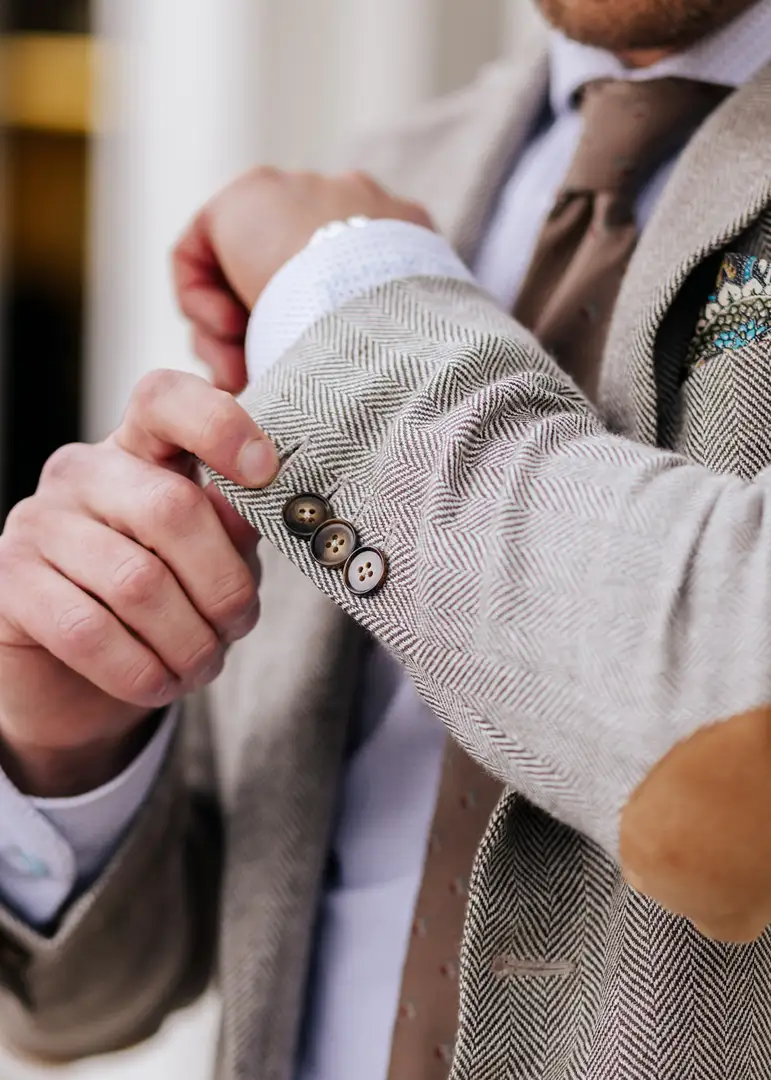
- Mother-of-pearl buttons: Typically more refined than basic plastic buttons.
- Reinforced button attachment: Helps prevent button loss over time.
- Single-needle seams: Often a mark of higher-end construction and cleaner finishing.
Our guide to formal cotton shirts goes further into how these details affect dressiness.
Main types of men's button-up dress shirts
At a practical level, most men will shop across these categories:
| Type | Best For | Typical Traits |
|---|---|---|
| Classic office dress shirt | Work, meetings, interviews | Fine twill, pinpoint, solid colors, spread collar |
| Oxford button-down | Smart casual, business casual | More texture, softer collar roll, slightly less formal |
| Formal dress shirt | Weddings, evening events | Smooth fabric, French cuffs, dressier front |
| Performance dress shirt | Travel, warm days, long wear | Stretch, moisture management, wrinkle resistance |
| Linen or linen-blend shirt | Spring and summer wear | Breathable, airy, naturally more relaxed |
| Custom or bespoke shirt | Best fit and personalization | Precise measurements, customizable collar/cuff details |
Fabric and Performance: Choosing Your Material
Fabric is where comfort, appearance, and durability all collide. The best-looking shirt on the hanger becomes a terrible purchase if it overheats, wrinkles instantly, or feels stiff enough to qualify as emotional punishment.
The three fabrics most men compare are fine twill, pinpoint oxford, and premium oxford cloth, with linen and performance blends rounding out the field.
| Fabric | Weight | Breathability | Formality | Best Use |
|---|---|---|---|---|
| Fine twill | Light to mid-weight | Good | High | Business, dress wear, year-round |
| Pinpoint oxford | Mid-weight | Good to very good | Medium-high | Office, daily wear |
| Premium oxford cloth | Mid to heavier | Very good | Medium | Business casual, OCBD styling |
| Linen or linen blend | Light | Excellent | Low to medium | Summer, resort, casual tailoring |
| Performance stretch blend | Light to mid-weight | Good | Medium | Travel, commuting, all-day comfort |
A few fabric notes matter most when you buy:
- Fine twill has a smooth face and a more elevated look under a jacket.
- Pinpoint oxford gives you texture without looking too casual.
- Oxford cloth is sturdy, breathable, and famous in button-down shirts.
- Linen breathes beautifully but wrinkles by nature.
- Supima and other extra-long-staple cottons can feel smoother, stronger, and softer over time.
For a broader look at how fabric choice affects tailoring overall, see our fabric guide. For a neutral reference on cotton fiber quality and why staple length matters, Supima is a useful starting point.
Selecting the Right Fabric for Button Up Dress Shirts for Men
If you want one shirt type that works in most situations, mid-weight fine twill is a strong answer. It holds shape well, tends to look polished, and wears comfortably across seasons.
If you want something slightly more relaxed and durable, pinpoint oxford is a smart office staple. It is often easier to dress down with chinos or even dark denim.
If heat is your enemy and summer is winning, linen or linen blends help a lot. Just remember: linen wrinkles because it is linen. That is not a flaw. That is the personality.
Performance, wrinkle-free, and non-iron: what they really mean
These features are a major reason the category is growing so quickly. With over 45% of U.S. dress shirt sales tied to performance and wrinkle-free options, men are clearly voting for convenience.
Here is the practical difference:
- Performance shirts: Often include stretch, moisture-wicking properties, and faster drying. Best for commuting, travel, and long workdays.
- Wrinkle-free shirts: Chemically treated or engineered to resist creasing better than untreated cotton.
- Non-iron shirts: Designed to come out of the wash looking smoother with little or no ironing needed.
- Easy-care shirts: A middle ground that reduces maintenance without claiming full non-iron performance.
These features improve practicality, but there is a tradeoff spectrum. The more treatment or synthetic content a shirt has, the less natural it may feel compared with pure premium cotton. For some men, that is a worthwhile exchange. For others, especially those who care most about drape and hand-feel, a high-quality cotton shirt with light easy-care treatment is the sweet spot.
Durability expectations
High-quality dress shirts can last years if you rotate them and care for them properly. Longevity usually depends on:
- Fabric quality
- Seam construction
- Collar and cuff reinforcement
- How often you wash them
- Whether you overheat them in the dryer
- Fit, because excess strain at the buttons or shoulders wears a shirt out faster
As a rough expectation, a premium shirt worn regularly in rotation and cared for correctly should outlast a bargain shirt by a wide margin. Cheap shirts often fail first at the collar points, cuff edges, side seams, or button attachment.
The Spectrum of Fit: From Ready-to-Wear to Bespoke
Fit is still the number one issue for most men buying dress shirts. A great fabric cannot rescue a shirt that pulls at the chest, balloons at the waist, or leaves your sleeves hovering somewhere above your wrists like they are avoiding commitment.
There are three main ways to buy.
Ready-to-wear
Ready-to-wear shirts are pre-made in standard size combinations. They are fast, accessible, and often the most budget-friendly.
Pros:
- Immediate purchase
- Wide range of price points
- Good for basic wardrobe building
Cons:
- Built for averages, not individuals
- Common problems at neck/sleeve combinations
- Often too full in the waist or too tight in the chest
Ready-to-wear options are widely available through major department stores and national clothing retailers, providing a quick solution for standard sizing needs.
Made-to-measure
Made-to-measure usually starts with a standard base pattern that is adjusted to your measurements. It offers a better fit than off-the-rack without the full complexity of a bespoke pattern.
Pros:
- Better balance of fit and price
- Useful for men with inconsistent off-the-rack sizing
- More personalization in collar, cuff, length, and silhouette
Cons:
- Still based on a block pattern
- Depends heavily on measurement accuracy
- Usually requires production time
Bespoke
Bespoke is the most individualized option. A pattern is created specifically for you rather than adjusted from a stock template.
Pros:
- Best fit potential
- Most control over style details
- Better accommodation for posture, shoulder slope, arm position, and body asymmetry
Cons:
- Higher price
- Longer lead time
- Best value for men who care deeply about fit and wear dress shirts often
At Tweeds Custom Suits, this is where our work stands out. We build clothing around the client, not around an "average man" who, frankly, has been getting way too much influence in menswear.
For a related look at proportional fit in tailoring, read How a Suit Should Actually Fit.
Mastering the Fit of Button Up Dress Shirts for Men
When we fit a shirt, we look at more than neck size and sleeve length.
Shoulder alignment
The shoulder seam should sit at or very near the end of your natural shoulder. Too far over, and the shirt looks sloppy. Too short, and movement becomes restricted.
Chest and torso room
A dress shirt should skim the body, not cling to it. You want enough room to move, sit, and breathe comfortably, but not so much extra fabric that it billows when tucked.
Armhole height
Higher armholes often improve mobility and give a cleaner silhouette. Low armholes may feel roomy standing still but can pull the whole shirt upward when you move your arms.
Sleeve length
Your cuff should usually end near the wrist bone and peek out slightly under a jacket sleeve. Too short looks accidental. Too long looks borrowed.
Collar comfort
You should be able to button the collar without feeling squeezed. Tight collars become miserable fast, especially in warm climates like Florida and the Southeast.
Slim, tailored, and classic fits
These labels vary by brand, but generally:
- Slim fit: Narrower through chest, waist, and sleeves
- Tailored fit: Trim but not aggressive; often best for most men
- Classic fit: Fuller cut for extra room and comfort
If you are between categories, tailored fit is usually the safest place to start.
Sizing tips
Measure these first:
- Neck circumference
- Sleeve length
- Chest
- Waist
Then check:
- Whether you wear tucked or untucked
- Whether you need extra room in shoulders or upper arms
- Whether standard neck/sleeve pairings match your body
Ready-to-wear works best when your body matches common proportions. If it does not, custom becomes less of a luxury and more of a sanity-saving device.
Styling and Care for Long-Lasting Quality
A good dress shirt should earn its keep. That means it needs to style easily and survive real wear.
How to style dress shirts by occasion
Business and office wear
Choose:
- White, light blue, or subtle stripe
- Fine twill or pinpoint oxford
- Spread or semi-spread collar
- Tailored fit
Pair with:
- Navy or charcoal trousers
- A blazer or full suit
- Brown or black leather shoes depending on the outfit
Formal events and weddings
Choose:
- Crisp white or pale blue
- Smooth fine twill or another dressy cotton weave
- Spread collar or French cuff
- Clean front and sharp fit
Pair with:
- Dark suit or tuxedo-adjacent formalwear
- Silk tie or bow tie
- Polished dress shoes
Business casual
Choose:
- Button-down collar or soft spread
- Oxford or pinpoint fabric
- Micro-checks, subtle stripes, or light solids
Pair with:
- Chinos
- Unstructured blazer
- Loafers or clean dress sneakers where appropriate
Casual smart wear
Choose:
- Oxford cloth or linen blend
- Open collar
- Slightly softer construction
Pair with:
- Dark jeans or chinos
- Casual sport coat
- Minimal accessories
Seasonal colors for May 2026 and beyond
For 2026, the most versatile shirt colors remain the classics, but seasonal style is leaning toward softer, wearable shades.
Best all-around picks:
- White
- Light blue
- Pale gray
- Blue stripe
- Soft ecru
- Muted sage for casual shirting
- Dusty pink in the right setting
For spring and summer in our Florida and Southeast markets, lighter shades and breathable fabrics make the most sense. For fall and winter, richer blues and slightly heavier cotton weaves become more useful.
Care instructions that protect longevity
High-quality shirts deserve better than panic laundering.
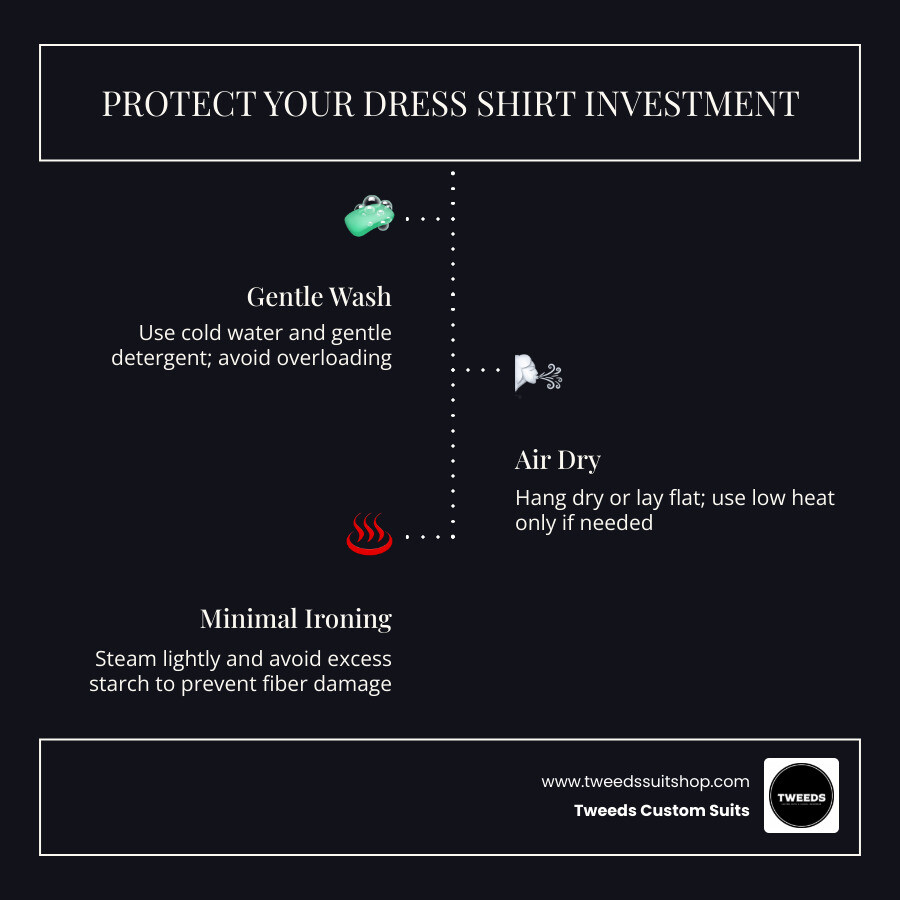
Best practices:
- Wash in cold or cool water when possible
- Use gentle detergent
- Avoid overloading the machine
- Hang dry or lay flat when you can
- Use low heat if tumble drying is necessary
- Iron on appropriate heat, or steam lightly
- Avoid excessive starch, which can make fibers brittle over time
For non-iron shirts, follow label instructions closely. Overheating can reduce the effectiveness of the finish. Many easy-care cotton shirts also do best when removed promptly from the dryer or, better yet, hung to dry after washing.
Some non-iron oxfords can handle warm wash and low tumble dry, but lower heat is usually kinder long term. Professional cleaning can help for formal shirts, though repeated harsh pressing is not ideal either.
How long should a quality dress shirt last?
A high-quality shirt can last several years with proper rotation and care. If you wear the same two shirts every week, any shirt will age faster. If you rotate six to ten work shirts, launder gently, and avoid high heat, your collars, cuffs, and seams will stay cleaner and stronger far longer.
Price vs. value
Here is the honest answer: the cheapest shirt is rarely the best value.
A lower-priced ready-to-wear shirt may work well if:
- The fit is already close
- You need immediate basics
- You want practical rotation pieces
A premium shirt or custom shirt becomes better value when:
- You wear dress shirts often
- You struggle with standard sizing
- You want better fabrics and finishing
- You care about durability and appearance over time
A shirt that costs more but fits properly and lasts longer is often the cheaper shirt in the long run. Menswear loves irony like that.
For reference, the market includes options ranging from affordable retail basics to premium heritage oxfords and custom shirts. While many local shopping options exist across our service regions in Florida, Georgia, North Carolina, Tennessee, and Louisiana, finding the right balance of quality and fit is key to a long-lasting wardrobe.
Frequently Asked Questions about Men's Dress Shirts
What is the difference between a button-up and a button-down shirt?
A button-up shirt describes any shirt that buttons up the front. A button-down shirt is a specific style with small buttons fastening the collar points to the shirt body.
So:
- All button-downs are button-ups
- Not all button-ups are button-downs
Button-down collars are usually a bit more casual and are especially common on oxford shirts. Spread and point collars are more traditional for dressier business or formal use.
How should I wash a non-iron dress shirt to maintain its finish?
Use mild detergent, avoid harsh bleach unless the care label specifically permits it, and wash on a gentle or normal cycle with cool to warm water according to the label. Do not blast it with high dryer heat. Remove it promptly and hang it while still slightly damp if possible.
A few simple rules:
- Low heat is safer than high heat
- Do not over-dry
- Iron only if needed and at moderate temperature
- Skip heavy starch
Those steps help preserve the wrinkle-resistant finish longer.
Is a custom-made shirt worth the higher price point compared to off-the-rack?
For many men, yes.
Custom-made is worth it when:
- Off-the-rack collars fit but sleeves do not
- Shirts pull across the chest or billow at the waist
- You want specific collar, cuff, placket, and button details
- You wear dress shirts frequently for work or events
- You care about long-term wardrobe quality
Ready-to-wear still makes sense for simple basics and quick purchases. But if you repeatedly alter shirts, replace poor fits, or settle for "good enough," custom often becomes the more sensible buy.
Conclusion
The best button up dress shirts for men balance five things: fit, fabric, construction, versatility, and care. Get those right, and one shirt can cover more ground than a crowded closet full of mediocre ones.
At Tweeds Custom Suits, we believe dress shirts should feel personal, not generic. As a family-owned business with showrooms across Florida and other select markets, we focus on personalized craftsmanship, premium fabric choices, and a perfect fit guarantee that takes the guesswork out of getting dressed well.
If you are ready to move beyond standard sizing and build shirts around your actual body and style, book your custom fitting today.