All About Quality Dress Shirts
Why the Right Dress Shirt Can Make or Break Your Entire Look
Dress shirts are the foundation of any sharp, professional wardrobe — yet most men are wearing ones that don't actually fit them well.
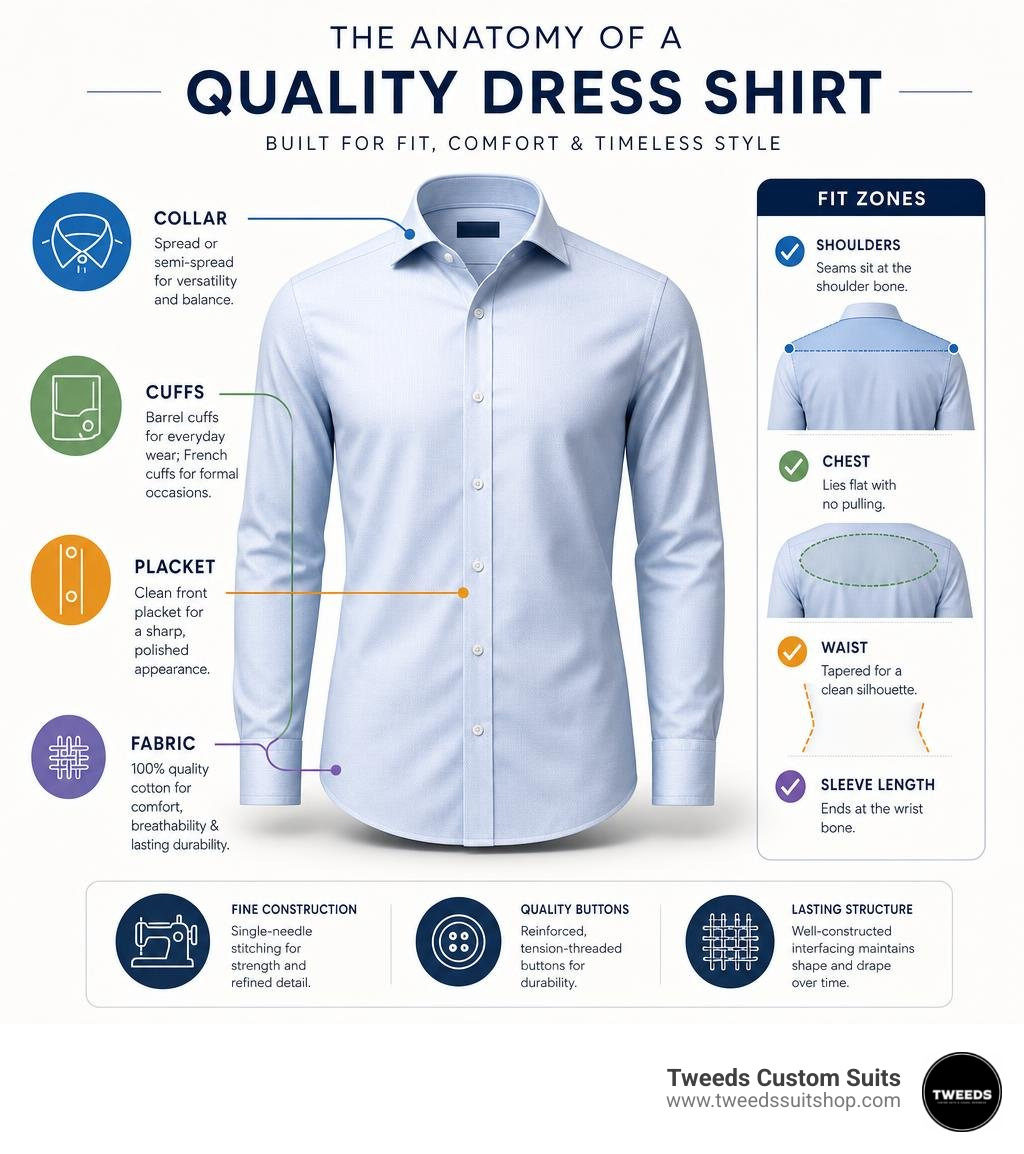
Here's a quick breakdown of what separates a great dress shirt from a mediocre one:
| Feature | What to Look For |
|---|---|
| Fit | Shoulder seams sit at the shoulder bone; chest lies flat with no pulling |
| Fabric | 100% cotton (Supima, Egyptian, or fine twill) for comfort and durability |
| Collar | Spread or semi-spread for versatility; point for a classic look |
| Cuffs | Barrel for everyday wear; French cuffs for formal occasions |
| Construction | Single-needle stitching; reinforced, tension-threaded buttons |
| Sizing | Neck + sleeve measurements beat generic S/M/L every time |
The global men's dress shirt market was valued at nearly $9.8 billion in 2023 and is growing fast — driven by a shift toward slim and tailored fits, better performance fabrics, and a growing demand for made-to-measure options. More than 60% of men aged 25–44 now prefer a slim or tailored fit over traditional boxy cuts.
Yet despite all these options, finding a shirt that truly fits — one that doesn't pull at the chest, bunch at the waist, or gap at the collar — remains surprisingly difficult when shopping off the rack.
I'm Donald Carlson , founder of Tweeds Custom Suits, and I grew up surrounded by dress shirts through my family's dry-cleaning business, learning early on what quality construction and proper fit actually look like. That hands-on background, combined with over three decades in menswear, shapes everything we do at Tweeds.
Dress shirts basics:
Anatomy of Premium Dress Shirts
To truly appreciate a high-quality garment, we must look closely at its construction. A premium dress shirt is much more than pieces of fabric sewn together; it is an engineered piece of clothing. From the way the collar stands to the strength of the buttons, every detail matters.
When you examine a high-end shirt, look closely at the stitching. Premium makers utilize single-needle stitching along the side seams. This process requires a steady hand and a slower manufacturing pace, but it yields incredibly clean, flat seams that do not pucker after washing.
Another telltale sign of quality is the placket—the strip of fabric where the buttonholes are located. A clean French front placket (where the fabric is folded over to the inside for a seamless look) is highly formal and elegant, while a standard front placket has a visible sewn strip for a classic look.
But what about the buttons themselves? Cheap plastic buttons crack easily under the heat of commercial presses. Premium garments feature genuine mother-of-pearl buttons or high-grade resin alternatives. To ensure they stay secured to the shirt for years, look for tension threading, which wraps the thread around the base of the button to create a sturdy "shank."
For a deeper dive into these construction elements, you can read our guide on Why Your Shirt Has Extra Buttons and Other Collar Mysteries.
Choosing the Right Collar for Dress Shirts
The collar is the focal point of your shirt. It frames your face and dictates the formality of your entire outfit. Selecting the right style is key to balancing your facial structure and coordinating with your suit lapels.
- The Spread Collar: This is the modern workhorse. The points of the collar are spread wider apart (typically ranging from 3.5 to 8.5 inches), making it perfect for accommodating medium-to-large tie knots, like the Full Windsor. It also looks exceptionally sharp when worn open without a tie. A high-quality white fine twill spread dress shirt offers a clean, versatile spread that works beautifully in both business and social settings.
- The Point Collar: A traditional classic. The collar points are closer together (usually 2.5 to 4 inches), which naturally elongates the face. This style is highly recommended for men with rounder faces.
- The Button-Down Collar: Originally created for polo players to keep their collars from flapping in the wind, this is the most casual of the dress collars. While popular in American business casual styling, it should generally be avoided for formal black-tie events.
- The Wingtip Collar: Reserved strictly for formal evening wear, like tuxedos. The collar stands straight up with the tips folded down, designed to sit neatly behind a bow tie.
Cuff Styles and Sleeve Lengths
The cuffs of your shirt should peek out about a half-inch from your suit jacket sleeve, serving as a subtle accent to your overall look.
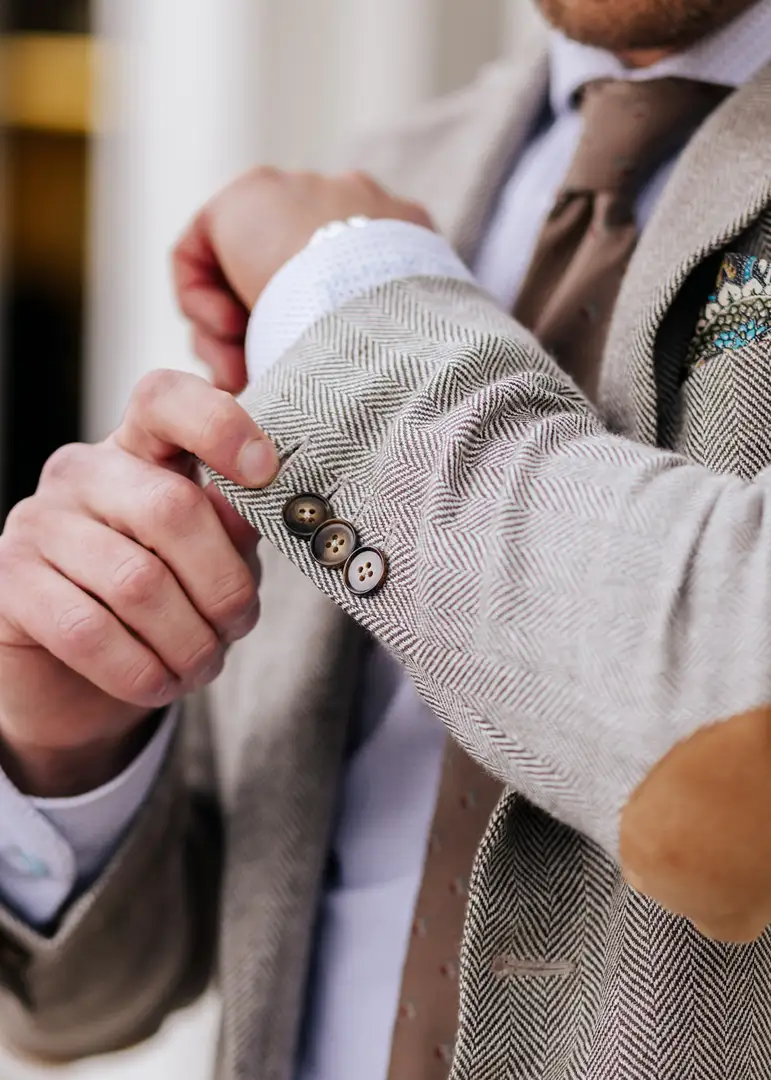
- Barrel Cuffs: The standard, buttoned cuff option. Most quality barrel cuffs feature double buttons to allow you to adjust the wrist size depending on whether you are wearing a watch.
- French Cuffs (Double Cuffs): These cuffs fold back on themselves and require cufflinks to fasten. They are the gold standard for formalwear, weddings, and high-powered business environments.
- Sleeve Pleats: Pay attention to how the fabric transitions from the sleeve to the cuff. High-quality designs have transitioned from three bulky sleeve pleats down to two, reducing excess fabric and preventing a "blousy" look around the forearm.
Fabric Selection and Performance Features
The fabric you choose directly impacts how comfortable you stay throughout the day, how the shirt drapes on your body, and how much effort you have to put into maintaining it.
When selecting the ideal material, the quality of the raw cotton is paramount. Supima cotton—which stands for "Superior Pima"—is grown exclusively in the United States and represents less than 1% of the world's cotton production. Because of its extra-long staple fibers, Supima cotton is twice as strong as regular cotton, incredibly soft, and highly resistant to pilling.
If you are looking to customize your fabric options from collar to cuff, you can read more in The Ultimate Guide to Choosing the Perfect Fabric for Your Custom Suit.
Performance Fabrics vs. Traditional Cotton
Modern textile technology has introduced performance dress shirts into the mainstream. Today, non-iron garments represent over 35% of all dress shirt sales in the United States.
| Feature | Traditional 100% Cotton | Performance / Non-Iron Cotton |
|---|---|---|
| Breathability | High; allows maximum airflow | Moderate to High (depending on treatment) |
| Wrinkle Resistance | Low; requires regular ironing or pressing | High; stays smooth all day long |
| Softness | Natural, luxurious feel | Soft, sometimes slicker texture |
| Maintenance | High care; prone to shrinking if dried hot | Low care; machine wash and hang dry |
Traditionalists often prefer untreated cotton for its unmatched natural breathability and luxurious hand-feel. However, busy professionals frequently opt for treated fabrics that keep them looking fresh from their morning commute to evening drinks.
For those who want a reliable, easy-care option, a high-quality regular fit blue solid button-down collar non-iron dress shirt combines the premium feel of Supima cotton with high-performance wrinkle resistance.
Formality Levels of Different Weaves
Not all cotton fabrics are woven the same way. The style of the weave determines the shirt's texture, weight, and overall formality level:
- Poplin / Broadcloth: A plain, tightly woven fabric that is smooth, thin, and lightweight. This is the most formal everyday weave, offering a crisp look that is perfect for professional settings.
- Twill: Woven with a diagonal rib pattern, twill has a subtle sheen and a heavier drape. It is highly durable, easy to iron, and works beautifully under a structured suit.
- Oxford Cloth: A heavier, basket-weave fabric with a visible texture. Oxford cloth is inherently casual and is best suited for sport coats, chinos, or relaxed office wear. If you are looking for a reliable, classic option, a traditional fit solid no-iron Supima Oxford dress shirt provides a durable Oxford weave that remains smooth even after dozens of washes.
To learn more about matching your shirt's weave to the occasion, check out our comprehensive guide: Button-Down or Bust: A Man’s Guide to Formal Cotton Shirts.
Sizing, Fit, and Construction Standards
An expensive shirt made from the finest Italian fabric will still look sloppy if it does not fit your body correctly. Understanding how different fits are constructed is the first step toward building a polished wardrobe.
| Fit Profile | Chest & Waist Cut | Best Suited For |
|---|---|---|
| Classic / Traditional Fit | Broad shoulders, straight cut with generous room through the torso | Men who prefer comfort and a traditional silhouette |
| Regular Fit | Standard cut with moderate room; slightly tapered | Average body types seeking a balance of comfort and shape |
| Tailored / Trim Fit | Tapered waist, closer to the body; minimal excess fabric | Lean to athletic builds wanting a clean, modern look |
| Slim Fit | Highly tapered waist, high armholes, snug chest | Very lean body types; eliminates all fabric bunching |
To see how your shirt fit coordinates with your outerwear, refer to our sizing breakdown in How a Suit Should Actually Fit.
Sizing Systems for Dress Shirts
When shopping for dress shirts , you will encounter two primary sizing systems:
- Alpha Sizing (S/M/L): Usually found in casual shirts. This system is highly imprecise because a "Medium" might fit your neck but have sleeves that are far too short.
- Dimensional Sizing (Neck & Sleeve): The standard for quality shirts. It uses two numbers—such as 16 / 34-35—representing your exact neck circumference and your sleeve length (measured from the back of your neck, over your shoulder, to your wrist bone).
Custom and Made-to-Measure Options
While dimensional sizing is a massive upgrade over generic alpha sizes, off-the-rack shirts are still built for "average" body models. They cannot account for unique physical traits, such as one shoulder sitting lower than the other, a muscular chest paired with a narrow waist, or varying wrist sizes.
This is where custom tailoring shines. Bespoke and made-to-measure shirts are built from scratch using your unique measurements, including your shoulder width, chest, waist, bicep circumference, and desired shirt length.
At Tweeds Custom Suits, we guide you through every choice—from selecting premium European fabrics to choosing your collar stiffness, placket style, and custom monogram. We offer this highly personalized experience across our physical showrooms in Florida and beyond, including our locations in Fort Lauderdale, Miami, and Delray Beach, where you can explore local shopping and dining like Shop | Experience - Downtown Delray Beach.
If you are outside of Florida, we also serve clients at our showrooms in major hubs like Charlotte, North Carolina, and Franklin, Tennessee, bringing our signature bespoke experience directly to you.
Frequently Asked Questions About Dress Shirts
How should a quality dress shirt fit?
A perfectly fitted dress shirt should feel comfortable while maintaining a clean, sharp silhouette.
- The Collar: You should be able to slide two fingers comfortably between the collar and your neck when the top button is fastened. Any more space will cause the collar to gap; any less will feel restrictive.
- The Shoulders: The shoulder seams should sit directly where your shoulder bone ends and your arm begins. If the seam droops down your arm, the shirt is too large.
- The Chest and Torso: The fabric should lie flat across your chest without pulling at the buttons. The torso should taper slightly to follow your natural body shape, avoiding any ballooning of excess fabric around the waist.
- The Sleeves: The sleeves should end precisely at the base of your thumb, allowing about a half-inch of cuff to show when wearing a suit jacket.
How do you properly care for non-iron and 100% cotton shirts?
Proper care extends the life of your garments significantly:
- For 100% Cotton (Untreated): Machine wash on a gentle, cold cycle, and hang dry. Avoid commercial tumble dryers, as high heat can shrink natural fibers and degrade the cotton over time. When ironing, use a warm setting with light steam, and avoid using heavy starch, which can make the fibers brittle.
- For Non-Iron Shirts: Machine wash warm with similar colors. Tumble dry on a low-heat setting, and remove the shirt promptly as soon as the cycle ends to hang it up immediately. The residual warmth from the dryer helps activate the wrinkle-free treatment, leaving the fabric smooth and ready to wear.
What are the best color and pattern rules for business vs. weddings?
Your shirt should always match the formality of the event:
- Business Formal: Stick to classic solid white and light blue. If you want to introduce patterns, opt for subtle pinstripes or micro-checks.
- Weddings: Solid white is the gold standard for formal weddings, especially when paired with a dark suit or tuxedo. For casual or outdoor summer weddings, lighter pastel shades or linen blends are highly appropriate.
- Casual Wear: Bold checks, windowpane patterns, and textured fabrics like Chambray or Oxford cloth are perfect for relaxed settings.
If you are preparing for an upcoming event in the Atlanta area, you can explore styling options at our Alpharetta showroom. For those on the Florida coast, you can stop by our Jacksonville showroom to experience our custom tailoring options and find the perfect fit for your next occasion.
Conclusion
At the end of the day, a great dress shirt is the unsung hero of your wardrobe. It has the power to make an off-the-rack suit look custom, or—if it fits poorly—undermine even the finest bespoke jacket.
At Tweeds Custom Suits, we believe that personalized craftsmanship and a perfect fit are things every man deserves to experience. As a family-owned business, we take pride in guiding you through the custom design process step-by-step, ensuring your shirts fit your exact measurements and personal style.
Whether you are dressing for a boardroom meeting, a wedding, or a casual weekend out, let us help you build a wardrobe of shirts that feel like they were made just for you—because they were.
Ready to upgrade your style? Book a fitting at one of our showrooms today at Tweeds Custom Suits.