Herringbone or Plaid? Choosing the right pattern for your custom look
When Pattern Choice Makes or Breaks Your Custom Suit
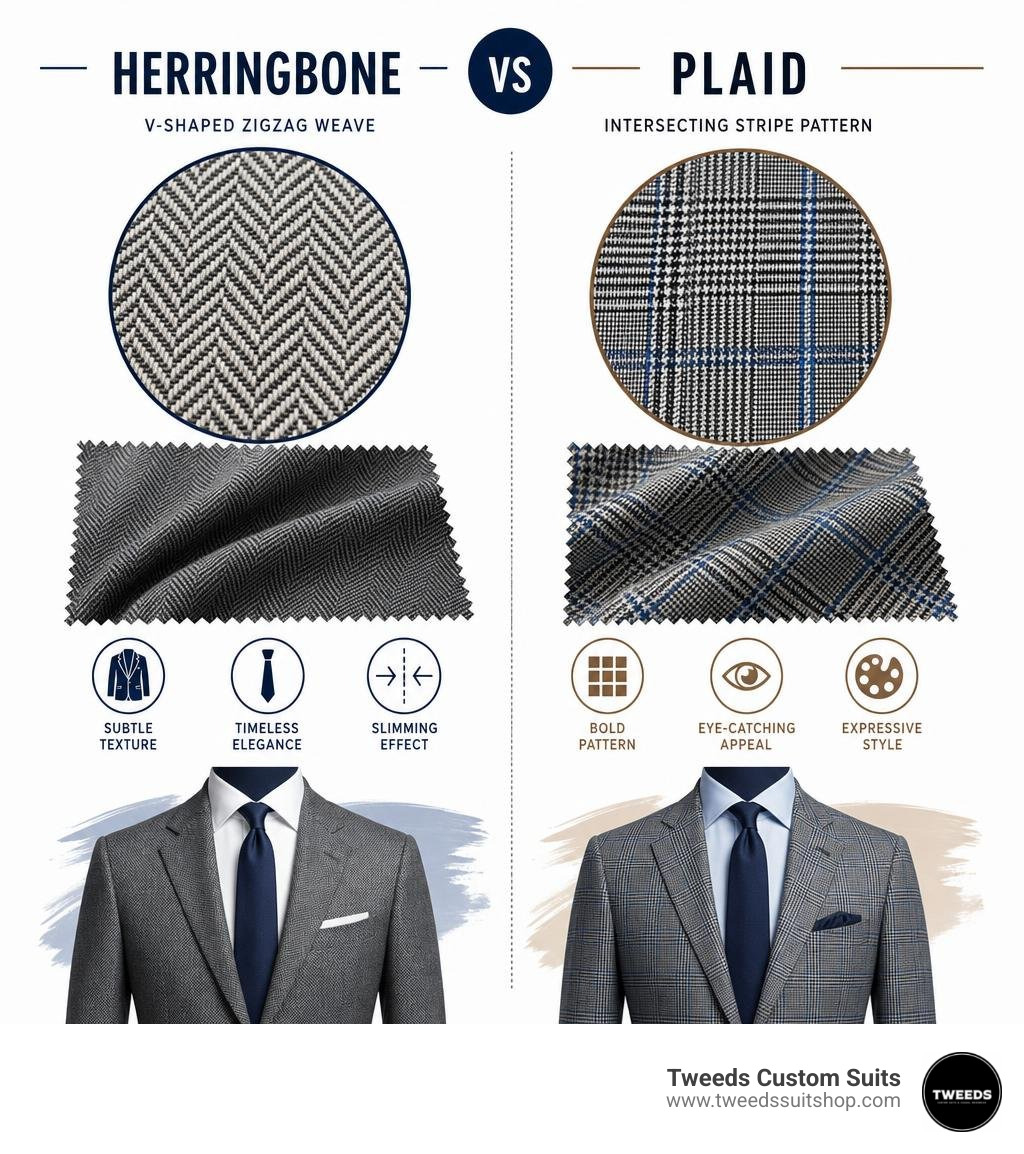
Herringbone pattern bespoke suits sit at the top of the classic menswear hierarchy — offering subtle texture, visual depth, and timeless versatility that most solid suits simply cannot match.
Here is a quick breakdown to help you decide:
| Pattern | Best For | Formality Level | Visual Effect |
|---|---|---|---|
| Herringbone | Business, weddings, events | Formal to smart-casual | Slimming, elongating |
| Plaid / Glen Check | Creative settings, casual occasions | Smart-casual to business | Bold, eye-catching |
The short answer: If you want one patterned suit that works across the boardroom, a wedding, and a cocktail event — herringbone is the safer, more versatile choice. If you want personality and visual impact, plaid delivers.
Both patterns have earned their place in a well-built wardrobe. The right choice depends on your lifestyle, your body type, and how the suit will be worn.
I'm Donald Carlson, founder of Tweeds Custom Suits, and I've spent decades handling fine fabrics — first through my family's dry-cleaning business and later as a custom clothier building bespoke wardrobes for discerning clients across Florida. Helping men choose the right fabric and pattern, including herringbone pattern bespoke suits , is one of the most rewarding parts of what I do at Tweeds.
Herringbone pattern bespoke suits vocab explained:
The Anatomy of Classic Menswear Patterns
To understand why certain patterns command respect in a room, we have to look at how they are made. Textile design is an art of geometry, tension, and history. Whether you are visiting our showrooms in Charlotte, NC, Franklin, TN, or right here in Florida, the choice between herringbone and plaid comes down to how these designs interact with light, movement, and your natural build.
If you are planning your next custom commission, perhaps in South Florida, choosing the right tailoring style is the first step toward a flawless wardrobe. To explore how we bring these patterns to life, check out our guide on Custom Suits in Fort Lauderdale.
To help you visualize how these fabrics differ structurally, let's break down their core properties:
| Feature | Herringbone Pattern | Plaid / Glen Check Pattern |
|---|---|---|
| Weave Type | Broken twill (V-shaped zigzag) | Plain or twill weave with intersecting bands |
| Visual Texture | Subtle, directional, looks solid from a distance | Bold, graphic, distinct grid lines |
| Formality | Highly formal (comparable to solids) | Semi-formal to casual |
| Separates Potential | Excellent (jacket pairs easily with solid trousers) | Moderate (requires careful color matching) |
| Best Fabric Match | Wool, tweed, linen, cashmere | Flannel, worsted wool, cotton |
What is the Herringbone Weave?
The herringbone pattern is not actually printed onto the fabric; it is woven directly into the structure. It is a creative variation of the classic twill weave, characterized by a distinctive zigzag pattern that resembles the skeletal structure of a herring fish.
Historically, this geometric layout dates back much further than modern tailoring. Ancient Roman engineers used the herringbone pattern when paving their legendary stone highways to distribute pressure evenly and prevent shifting. 19th-century British and Irish weavers adopted this structural marvel for heavy outdoor tweeds, realizing that the broken twill weave offered incredible strength, natural wrinkle resistance, and a beautifully drapeable texture.
When woven into fine suiting fabrics, herringbone alternating slanted lines create a subtle ridge pattern. This produces a unique play of light and shadow: from a distance, the suit appears to be a rich, solid color, but up close, it reveals a sophisticated, tactile depth.
Understanding Plaid and Glen Check Patterns
Plaid, on the other hand, relies on intersecting horizontal and vertical stripes of varying colors and widths to create a grid-like design. Within the plaid family, you will find several variations, including tartan, Prince of Wales (glen check), and windowpane.
The glen check pattern originated in the rugged valleys of Scotland as a way for local clans to identify themselves. Unlike the directional flow of herringbone, plaid is highly graphic. It demands attention and acts as a bold statement piece. While incredibly stylish, plaid requires a bit more care when styling to avoid clashing with patterned shirts and ties.
If you want to push the boundaries of pattern design even further for formalwear, you can explore our tips on how to Stand Out from the Crowd with Custom Patterned Tuxedo Fabric.
Why Choose Herringbone Pattern Bespoke Suits?
When building a versatile wardrobe in July 2026, the goal is often to find garments that bridge the gap between different social settings. Herringbone pattern bespoke suits do exactly that. They offer the perfect balance of classic heritage and contemporary precision, giving you a look that is polished without feeling stiff.
While solid navy and charcoal suits are essential foundations, they can sometimes feel a bit uninspired. Herringbone adds an edge of sophistication without shouting. It is an iconic pattern that imparts a sense of quiet luxury, making it a true wardrobe staple that outlasts shifting fashion trends.
Visual Benefits of Herringbone Pattern Bespoke Suits
One of the greatest advantages of a herringbone suit is its optical effect. Because the zigzag weave is oriented vertically, it creates a subtle illusion of continuous vertical stripes. This provides a visually lengthening and slimming effect, making the wearer appear taller and more streamlined.
Furthermore, the physical texture of the weave catches the light differently as you move. This prevents the fabric from looking flat or dull under harsh office lighting or during outdoor evening events.
To ensure you get the absolute most out of these visual benefits, the cut of the garment must be flawless. You can read more about the physics of a great drape in our guide on How a Suit Should Actually Fit.
Styling Versatility of Herringbone Pattern Bespoke Suits
Herringbone’s subtle texture makes it incredibly easy to dress up or down. Here is how you can style your custom herringbone suit for various occasions:
- The Boardroom Classic: Pair a charcoal or navy herringbone suit with a crisp white semi-spread collar dress shirt, a solid silk tie in deep burgundy or royal blue, and black leather oxford shoes.
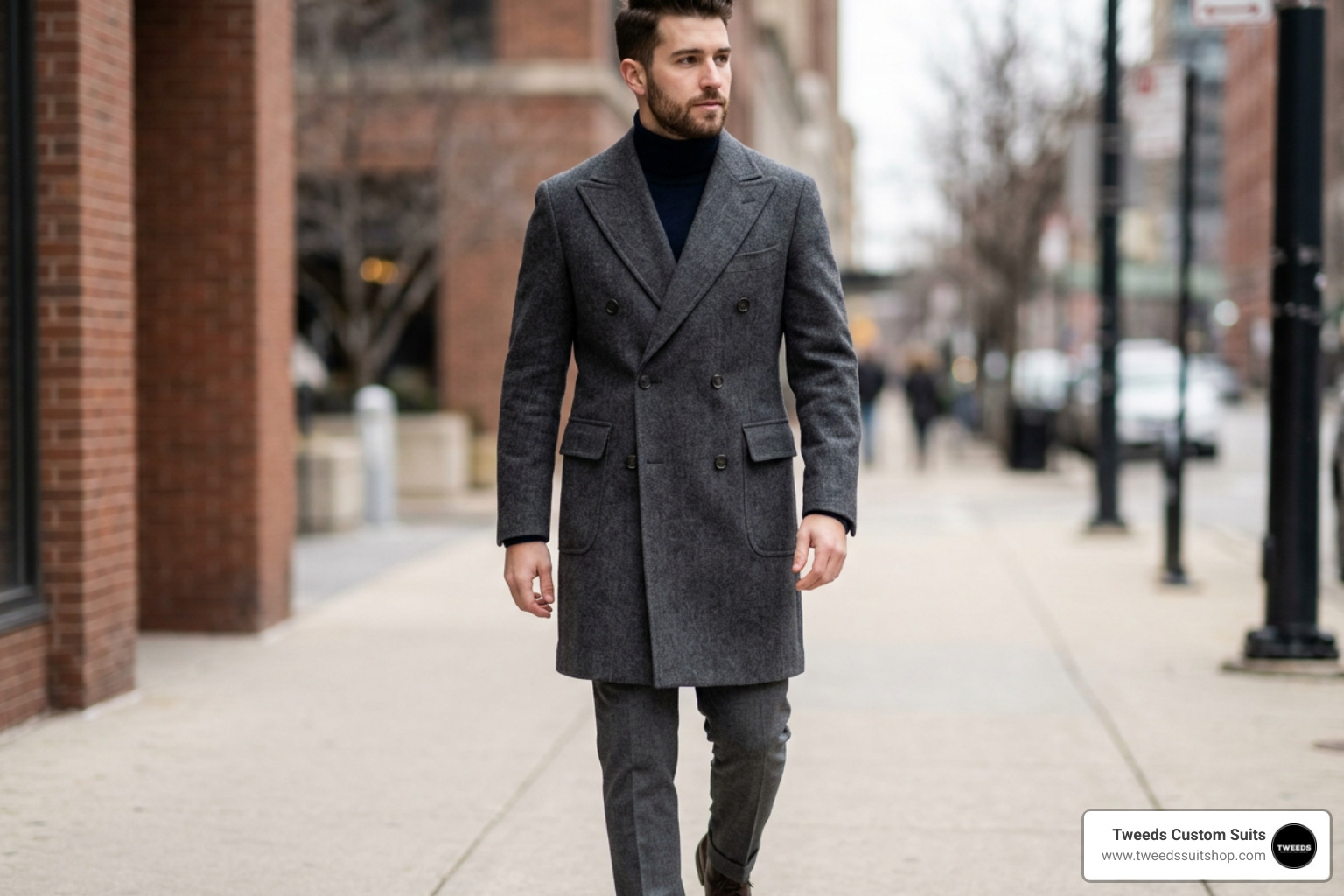
- The Modern Cocktail Social: Wear a mid-blue or forest green herringbone jacket with a dark knit turtleneck, dark denim, and suede Chelsea boots for an effortless, tactile contrast.
- The Wedding Guest: Opt for a lighter grey or biscotti-brown herringbone suit, paired with a pastel blue shirt, a subtle patterned pocket square, and dark brown leather monk straps.
- As Versatile Separates: Unlike many striped or plaid suits, a herringbone suit jacket easily doubles as a standalone sport coat when paired with solid chinos or tailored trousers.
Fabric Selection and Seasonality for Patterned Suits
The beauty of bespoke tailoring is that you are not locked into a single weight or style of fabric. The weave of your herringbone suit can be adapted to perform beautifully in any climate.
Whether you are navigating a humid afternoon in Tampa or a crisp autumn evening in Rye, NY, selecting the right fiber blend is critical. To understand how different weaves and fibers behave on your frame, consult The Ultimate Guide to Choosing the Perfect Fabric for Your Custom Suit.
Heavyweight Tweeds and Wool Blends
Historically, herringbone is deeply rooted in heavy wools. In cooler climates — or for winter travel — a heavyweight wool herringbone suit (around 310g to 340g) provides incredible structure, warmth, and a rich, traditional drape.
Tweed and flannel herringbone fabrics are naturally robust and wrinkle-resistant, holding their shape flawlessly throughout the day. These heavier options are perfect for our clients in places like Franklin, TN, or Rye, NY, who need a sophisticated layer against the cold.
Lightweight Linens and Tropical Wools
For our clients in Florida locations like Naples, Sarasota, Orlando, Fort Lauderdale, and Miami, heavy wools are simply not practical for year-round wear. Fortunately, herringbone looks spectacular in lightweight, breathable blends.
By blending 60% premium wool with 40% linen, or opting for a high-twist tropical Merino wool (around 180g to 240g), you get the gorgeous visual texture of herringbone with a feather-light feel. The linen content allows heat to escape, while the wool maintains the suit’s structure and prevents the excessive wrinkling associated with pure linen.
If you are ready to experience these fabrics in person, you can book an appointment at any of our Tweeds Custom Suits Showrooms.
Customization Options for Your Patterned Suit
The true magic of the bespoke process lies in the details. When designing a herringbone suit with us, every element is tailored to your taste.
Because the herringbone pattern is detailed yet subtle, it acts as a wonderful canvas for personalized touches. Here are a few ways to elevate your design:
- Lapel Style: A classic 3.5-inch notch lapel keeps the suit highly versatile for business. If you want a more commanding, regal presence for weddings or galas, opt for a wide peak lapel.
- Canvas Construction: We highly recommend a half-canvas or full-canvas construction with pad-stitched lapels. This allows the herringbone fabric to drape naturally over your chest, molding to your body over time.
- The Lining: Contrast a conservative navy or charcoal herringbone exterior with a bold, personalized interior. Silk or Bemberg linings in rich paisley, deep burgundy, or vibrant jewel tones add a delightful pop of personality when your jacket opens.
- Button Selection: Choose natural horn or dark mother-of-pearl buttons to complement the organic texture of the weave.
For a deeper dive into the unique design flourishes you can add to your next commission, check out our guide on Don’t Be a Plain Jane: Cool Features for Your Next Bespoke Suit.
Frequently Asked Questions About Custom Suit Patterns
How does herringbone differ from houndstooth?
While both are classic heritage patterns woven using twill variations, they look completely different up close. Herringbone consists of alternating diagonal lines that meet to form a continuous V-shaped zigzag.
Houndstooth is a broken-check pattern made of four-pointed, abstract shapes that resemble a dog's tooth. Houndstooth has a much more graphic, blocky appearance, whereas herringbone is smoother and more directional.
Can I wear a herringbone suit to a summer wedding?
Absolutely! The key is choosing the right fabric blend and color. A lightweight wool-linen or wool-silk-bamboo blend in oyster gray, light blue, or biscotti-brown looks incredibly fresh and seasonal. The herringbone weave adds a sophisticated, touchable texture that sets you apart from standard plain-weave summer suits.
How do I care for a wool herringbone suit?
To keep the delicate ridges of the herringbone weave looking sharp, follow these three simple steps:
- Never Use an Iron: Direct heat can flatten the weave and create a cheap-looking shine. Always use a high-quality fabric steamer to release wrinkles.
- Brush Regularly: Use a soft-bristled garment brush after each wear to gently remove dust, lint, and organic fibers from the crevices of the weave.
- Hang Properly: Store your suit on wide, contoured wooden hangers to preserve the shoulder structure, and give the fabric 24 to 48 hours to rest between wears.
Conclusion
At Tweeds Custom Suits, we believe your clothes should tell a story of craftsmanship, attention to detail, and personal style. Whether you choose the timeless, elongating texture of a herringbone weave or the bold, confident lines of a classic plaid, our family-owned business is dedicated to bringing your vision to life.
With more than 10 showrooms across Florida, Georgia, North Carolina, Tennessee, and New York, we make the bespoke process seamless, personalized, and backed by our perfect fit guarantee.
Ready to design a look that is uniquely yours? Book a consultation with Tweeds Custom Suits today, and let's craft your next masterpiece together.